
7 Best Ways to Choose an Autonomous Forklift for Warehouses?

Time:2026-10-16 Author:Amelia
0%

Choosing an autonomous forklift is not a simple equipment purchase. It is a decision about workflow, people, space, and future growth. The right machine should move safely through real warehouse conditions, not only perform well in a product demonstration.

Steve Banker, an automation specialist and former ARC Advisory Group analyst, has said, “The warehouse is the last frontier of automation.” His observation remains useful because many facilities still depend on manual decisions, uneven floor markings, and disconnected software. A practical evaluation must examine load capacity, pallet dimensions, aisle width, navigation accuracy, battery performance, safety sensors, and system integration. Small details matter. A narrow turning area can erase an impressive productivity claim.

This guide explains How To Choose An Autonomous Forklift For A Warehouse through seven practical considerations. It looks beyond speed and advertised return on investment. You will need to inspect traffic patterns, dock conditions, rack heights, floor quality, and the skills of your operators. Vendor training and after-sales support also deserve close attention. They are easy to overlook.

No choice is perfect. A highly automated forklift may struggle with damaged pallets or changing layouts. A cheaper model may create hidden maintenance costs. The best decision comes from testing the forklift with actual loads, actual routes, and actual workers. Measure waiting time, near misses, charging interruptions, and completed moves. Then question the results. A spreadsheet alone cannot reveal every operational weakness.
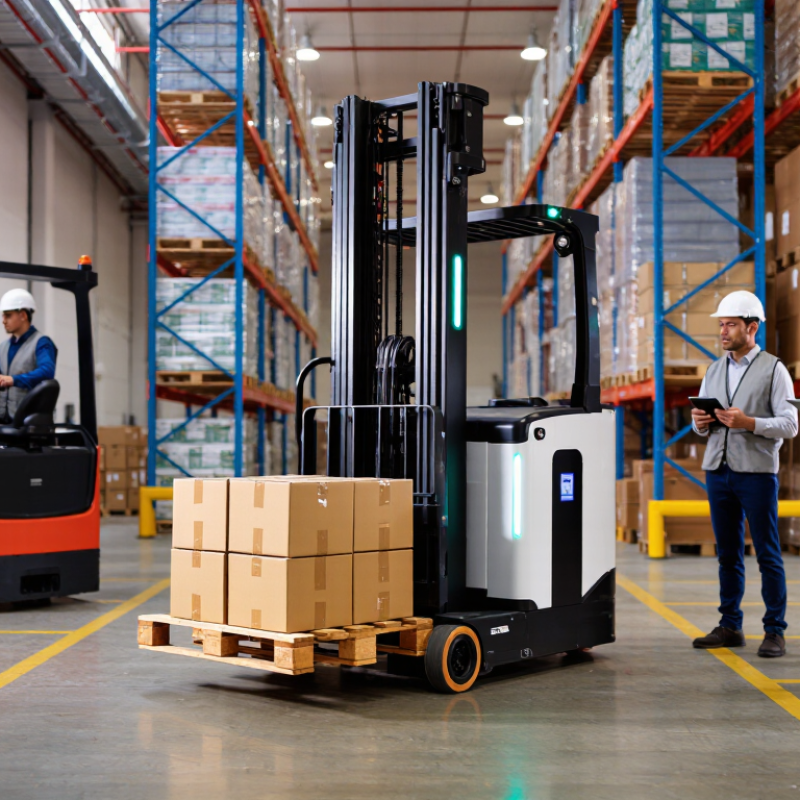
7 Best Ways to Choose an Autonomous Forklift for Warehouses?

Define Warehouse Tasks and Autonomous Forklift Requirements

Define the warehouse task before selecting an autonomous forklift. Map every pallet movement, including origin, destination, load weight, and frequency. A forklift moving full pallets differs from one handling mixed cases. Record aisle widths, floor joints, ramps, lighting, and pedestrian crossings. Small details matter. MHI’s 2024 Annual Industry Report found that 83% of supply chain professionals expect continued investment in technology and innovation. That investment should solve a measured problem, not create an expensive experiment.

Set practical requirements around payload, lift height, travel speed, navigation, and system integration. Check whether the vehicle can read pallet positions accurately in changing conditions. Confirm compatibility with warehouse management and fleet-control systems. The International Federation of Robotics reported 541,302 industrial robots installed worldwide in 2023. This figure shows strong automation momentum, but it does not prove every warehouse needs autonomous lifting equipment. Your process may be too variable.

Run a small pilot with real operators and ordinary shift conditions. Measure completed moves per hour, misplacements, waiting time, charging interruptions, and near-miss events. Include manual handoffs and congested periods. Ask workers where the design feels awkward. They often notice problems dashboards miss. A perfect digital layout may fail beside a damaged pallet. Review the results after several weeks, then revise the task list and acceptance criteria before expanding deployment.

Assess Navigation, Safety, and Environmental Compatibility

Choosing an autonomous forklift starts with understanding the warehouse’s real conditions, not its brochure. Observe narrow aisles, changing pallet locations, floor damage, ramps, and pedestrian crossings. A navigation system should remain accurate when lighting changes or temporary obstacles appear. Test its mapping method in a busy operating area. Static demonstrations can hide problems.

Safety requires more than an emergency stop button. Check obstacle detection, automatic speed reduction, warning signals, and controlled stopping distances. Ask how the forklift behaves when a person steps behind it suddenly. Review event records and maintenance alerts with qualified safety staff. Local workplace requirements should guide the risk assessment. Small gaps matter.

Environmental compatibility is equally important. Measure temperature, humidity, dust, floor grip, and available charging space. Cold rooms may reduce battery performance. Uneven floors can affect load stability and sensor readings. Noise levels also matter when workers depend on audible alerts. A short pilot with normal loads can expose weaknesses that specifications miss. Do not test only on quiet days. Operators should record near misses, route delays, and manual interventions. Some failures may come from poor warehouse layout rather than the forklift itself. That distinction deserves honest review.

7 Best Ways to Choose an Autonomous Forklift for Warehouses

Assess navigation, safety, environmental compatibility, and operational fit before deployment.

The chart presents a practical 100-point screening framework. Navigation and safety receive the highest weighting because reliable localization, obstacle detection, emergency stopping, and safe human interaction are essential for warehouse deployment. Environmental compatibility, payload stability, system integration, uptime, and serviceability should then be validated through on-site trials and documented operating requirements.

Compare Load Capacity, Lift Performance, and Operating Range

Choosing an autonomous forklift starts with the load, not the software. Record pallet weight, dimensions, center of gravity, and the highest rack position. Rated capacity usually falls as lift height increases. A 2,000-kilogram rating at floor level may not apply at 6 meters. Check the manufacturer’s load chart and test a fully loaded pallet on your narrowest aisle.

Lift performance needs measurable targets. Compare lift speed, lowering control, mast stability, and positioning accuracy. A small height error can damage a rack beam or leave a pallet unstable. ISO 3691-4 provides a useful safety framework for driverless industrial trucks. It should support your site risk assessment, not replace it.

Numbers expose weak choices.

Operating range is more than travel distance. Measure duty cycles, charging time, battery recovery, floor conditions, ramps, and traffic delays. The International Federation of Robotics reported 86,230 professional service robots for transport and logistics sold in 2023, a 24% annual increase in that category. The figure signals growing adoption, but it does not guarantee suitability for your warehouse. Compare real route completion per shift, not advertised distance.

Run a pilot during peak activity. Track completed moves, missed scans, waiting minutes, and energy use. Include cold rooms, uneven joints, and mixed pallet quality. That matters. A forklift that performs well on clean floors may struggle beside a loading dock. I would also leave capacity headroom, because weight records are often imperfect. A lower-rated machine with reliable control may outperform a stronger unit that requires frequent human intervention.

Evaluate Software Integration, Fleet Control, and Data Features

Choosing an autonomous forklift starts with software, not just lifting capacity.

The vehicle must connect with your warehouse management system, order platform, and safety controls. Ask for documented APIs, stable data formats, and clear integration timelines. A short live test can reveal more than a polished presentation.

Fleet control deserves close attention.

A central dashboard should show location, battery level, task status, and active alerts. Supervisors need to pause, reroute, or assign vehicles without walking across the warehouse. Check whether the system handles traffic conflicts near loading bays and narrow aisles. Keep it practical.

Data features can expose useful patterns.

Review travel distance, idle time, charging cycles, completed tasks, and intervention frequency. These figures help identify congestion and training gaps. However, raw data is not automatically useful. Data needs context. Confirm who owns the records, how long they remain available, and whether reports can be exported. During warehouse trials, teams sometimes measure speed while ignoring failed handoffs. That is a mistake worth admitting. A slower forklift with reliable software may support steadier output. Test normal shifts, peak periods, weak network areas, and unusual pallet locations before making a final decision.

Calculate Total Ownership Cost and Select a Suitable Supplier

An autonomous forklift can reduce repetitive travel, but its real cost extends beyond the purchase price. Calculate total ownership cost over five to eight years. Include software subscriptions, charging equipment, batteries, maintenance, operator training, integration, insurance, and downtime. A low-priced unit may become expensive when service visits are slow.

Use your warehouse data, not sales estimates. Record pallet moves per hour, aisle widths, floor conditions, shift length, and peak-season volume. For example, eight-hour shifts may require opportunity charging or an additional battery. Measure labor savings carefully. Reassigning workers may create value, but removing all labor from the calculation can distort the result. Our first estimate was too optimistic because it ignored integration delays.

Supplier quality deserves equal attention. Request a site survey, a written implementation plan, response-time commitments, spare-parts availability, and clear software update terms. Ask for references from warehouses with similar traffic and floor layouts. A controlled pilot can reveal blocked routes, barcode errors, and charging interruptions before full deployment. Watch the details. During trials, record completed missions, intervention frequency, battery usage, and recovery time after faults. The supplier should explain these results in plain language, with evidence rather than promises. Review training materials and maintenance records before signing. Also confirm who owns operational data and who supports the system after warranty coverage ends. A reliable supplier welcomes difficult questions, although no supplier can guarantee perfect uptime.

7 Best Ways to Choose an Autonomous Forklift for Warehouses? - Calculate Total Ownership Cost and Select a Suitable Supplier

No. Selection Dimension What to Evaluate Practical Benchmark Indicative Data TCO Impact Supplier Evidence Required
1 Load Capacity and Lift Performance Confirm rated capacity, load-center distance, maximum lift height, residual capacity at height, and performance with uneven or wrapped loads. Select at least 10% more capacity than the heaviest routine load and verify the rating at the required lift height. Typical autonomous counterbalance models: 1,000–2,500 kg capacity; lift height commonly 3–6 m. Oversizing can increase purchase price and energy use; undersizing creates safety risks and limits utilization. Load charts, test results at maximum height, pallet-quality requirements, and documented overload protection.
2 Navigation and Site Compatibility Assess navigation technology, aisle width, floor condition, ramps, reflective surfaces, pedestrian traffic, dock areas, and the need for infrastructure changes. Map the complete operating area and run a live pilot during normal peak traffic, not only in an empty warehouse. Many facilities require clear aisles of approximately 2.8–3.5 m, depending on truck type and load dimensions. Infrastructure changes may add approximately $5,000–$30,000 per site, depending on layout and integration needs. Site survey, digital map, obstruction-handling demonstration, travel-speed limits, and pilot acceptance criteria.
3 Safety and Regulatory Compliance Review obstacle detection, emergency stops, speed control, pedestrian warning systems, safety-rated scanners, fire protection, and compliance documentation. Require risk assessment, documented safety functions, operator training, and validation under real pedestrian and vehicle interactions. Common operating speeds are approximately 1.5–2.5 m/s, with automatic reduction near people, corners, and intersections. Strong safety controls reduce accident exposure, product damage, downtime, and potential insurance costs. Risk-assessment report, safety certificates, inspection schedule, incident logs, and clearly defined responsibility for compliance.
4 Throughput and Battery Availability Compare travel speed, lifting cycles per hour, battery capacity, charging method, opportunity charging, and performance during multi-shift operation. Measure completed moves per hour during a representative shift and include waiting, charging, congestion, and pallet alignment time. Lithium-ion battery systems commonly support one or two shifts; a full charge may take about 1.5–3 hours, depending on capacity and charger. Battery and charging costs may represent $8,000–$25,000 over five years per truck, excluding electricity. Independent cycle test, battery warranty, charge-cycle rating, charger specifications, and guaranteed availability percentage.
5 Software, Integration, and Data Check fleet-management functions, task allocation, traffic control, warehouse-management-system integration, APIs, reporting, cybersecurity, and remote diagnostics. Require real-time task status, exception alerts, performance dashboards, role-based access, and exportable operational data. Software and integration fees commonly range from $10,000–$60,000 initially, depending on the number of systems and workflows. Recurring software, cloud, support, and integration fees may add $2,000–$10,000 per truck annually. API documentation, cybersecurity controls, data-ownership terms, integration timeline, uptime commitment, and support response targets.
6 Maintenance and Serviceability Evaluate preventive-maintenance intervals, spare-parts availability, technician coverage, remote support, tire and fork replacement, and mean time to repair. Set a target for parts availability within 24–72 hours and require a local or regional service plan before purchase. Planned maintenance often requires 4–8 service visits per year, depending on operating hours and duty cycle. Routine maintenance may cost $3,000–$8,000 per truck annually; downtime can exceed direct repair costs. Service-level agreement, parts stock list, technician response time, maintenance checklist, warranty exclusions, and downtime compensation terms.
7 Five-Year Total Ownership Cost and Supplier Fit Compare purchase price, installation, software, energy, labor, maintenance, training, battery replacement, downtime, financing, and residual value. Select the supplier with the strongest documented five-year business case, not simply the lowest initial quotation. Typical five-year TCO for one autonomous forklift: approximately $130,000–$260,000, depending on configuration and utilization. A supplier should demonstrate payback within approximately 2–5 years under verified workload assumptions. Itemized quotation, five-year cost model, reference-site results, pilot proposal, financial stability, warranty, and contractual performance guarantees.
Illustrative TCO assumptions: One autonomous electric forklift operating 2,000 hours per year for five years; electricity at $0.12–$0.18 per kWh; scheduled maintenance included; costs shown in USD and intended for preliminary budgeting. Actual results depend on payload, travel distance, shift pattern, facility layout, labor rates, energy prices, software scope, and service terms.

FAQS

What should a warehouse define before selecting an autonomous forklift?

Map each pallet movement, including origin, destination, weight, frequency, and handoff points. Small details matter.

Which warehouse conditions should be recorded?

Record aisle widths, floor joints, ramps, lighting, pedestrian crossings, and temporary obstacles. Inspect damaged flooring too.

What technical requirements should buyers compare?

Compare payload, lift height, travel speed, navigation accuracy, charging needs, and system integration. Avoid vague specifications.

How can a warehouse test an autonomous forklift properly?

Run a small pilot during normal shifts. Include mixed loads, busy periods, real operators, and manual handoffs.

Which pilot results should be measured?

Track completed moves per hour, misplaced pallets, waiting time, charging interruptions, delays, and near-miss events.

How should navigation performance be checked?

Test narrow aisles, changing pallet locations, poor lighting, ramps, and temporary obstacles. Quiet demonstrations can hide weaknesses.

What safety features deserve close attention?

Check obstacle detection, speed reduction, warning signals, stopping distances, event records, and maintenance alerts. An emergency stop is not enough.

How do environmental conditions affect autonomous forklift performance?

Measure temperature, humidity, dust, floor grip, noise, and charging space. Cold rooms may reduce battery performance.

Why should operators participate in the evaluation?

Workers notice awkward handoffs, delayed warnings, and unsafe-feeling routes. Dashboards may miss these details.

What should happen before expanding deployment?

Review several weeks of results and revise acceptance criteria. The original plan may be wrong. That is worth admitting.

Conclusion

How To Choose An Autonomous Forklift For A Warehouse begins with understanding the facility’s daily tasks, including pallet movement, storage density, travel distances, traffic patterns, and required labor support. These needs help determine the appropriate forklift type, automation level, payload, lift height, operating speed, battery range, and charging method. The warehouse environment should also be reviewed carefully, including floor conditions, aisle width, lighting, temperature, dust, pedestrian activity, and safety requirements. Reliable navigation, obstacle detection, emergency stopping, and safe interaction with workers are essential for stable operations.

Next, evaluate how well the forklift can integrate with warehouse management and control systems. Fleet coordination, task scheduling, performance reports, remote monitoring, and data access can improve efficiency and simplify decision-making. Finally, compare the total ownership cost, including purchase, installation, training, maintenance, energy use, software, and future expansion. A suitable supplier should provide clear technical support, dependable service, customization options, and a solution that can grow with the warehouse’s long-term operational needs.

Amelia

Amelia

Amelia is a seasoned marketing professional with a wealth of expertise in our company’s core offerings. With an unwavering passion for driving growth and innovation, she plays a pivotal role in shaping our marketing strategies and enhancing brand visibility. A key aspect of her responsibilities......