

Direct OEM Deployment Lineup
Enterprise Mobile Robotics & Autonomous Chassis Catalog
Pre-calibrated industrial autonomous mobile platforms, counterbalanced smart forklifts, and sub-chassis stealth lifters manufactured for rapid zero-infrastructure deployment.






Global Market Analysis & Operational Paradigm
The Global Shift Toward Stealth Top-Lifting AMR Architecture
Material handling workflows across North America, the European Union, and Asia-Pacific are transitioning from rigid automated guided vehicles (AGVs) to decentralized, sub-chassis autonomous mobile robots.
Overcoming the Pitfalls of Conventional Fixed Infrastructure
For more than two decades, warehouse automation relied upon magnetic tape strips, inductive floor wires, and QR code matrix grids. While effective in tightly controlled environments, these legacy methods impose exorbitant facility renovation costs and suffer from rapid operational degradation when floor surfaces wear or tear. Any minor reconfiguration of production lines necessitated weeks of route re-stickering and civil construction.
The modern stealth top-lifting robot operates under an entirely liberated paradigm. Engineered with an ultra-slim vertical height—frequently beneath 250 mm—these robots tunnel directly underneath standardized transport racks, customized pallet cages, or modular roller carts. Utilizing a high-torque mechanical or electro-hydraulic scissor/screw lifting apparatus, the AMR raises the payload within 2 to 3 seconds, navigates dynamically through shared human-machine corridors, and lowers the payload at designated workstation buffer nodes.
- Zero Facility Downtime: Laser SLAM mapping functions entirely without ambient reflectors or magnetic tags.
- High-Density Payload Ratios: Up to 1,500 kg lifting capability housed inside an agile, omnidirectional or dual-differential footprint.
- Goods-to-Person Efficiency: Eliminates up to 75% of wasted worker transit walking time in e-commerce fulfillment hubs.
Manufacturing Ecosystem & Cost-Performance Economics
The SCP Factory Advantage: Engineering Prowess & Scale
Why Fortune 500 manufacturing corporations and international system integrators partner directly with Sichuan Supply Chain Power Chain Technology Co., Ltd. (SCP Technology) for their stealth robot fleets.
Full-Stack Hardware Verticalization
Unlike Western brand-assemblers who outsource drivetrains, structural stamping, and electronics to third-party tiers, SCP Technology manufactures its core chassis, planetary servo drive wheels, lifting columns, and electronic control boards within our proprietary production lines in Chengdu, Sichuan.
1-Day Rapid Deployment Architecture
By coupling in-house dual LiDAR SLAM algorithms with our self-developed SCC core robot controller, SCP vehicles require zero retrofits on compatible industrial concrete floors. Project commissioning cycles drop from 4–6 months down to single-day floor mapping and digital twin calibration.
Aggressive Capital Payback (<18 Months)
By drastically cutting initial hardware procurement CAPEX and eliminating recurrent vendor software licensing through open RESTful API frameworks, enterprise customers achieve complete capital recovery inside 12 to 18 operational months, while slashing cargo damage rates up to 99%.
Sub-Chassis Mechatronics & Safety Envelopes
Inside the Engineering Anatomy of an SCP Stealth Top-Lifter
Combining dual-laser 360-degree LiDAR coverage, AI deep-learning vision sensors, and sub-millimeter precision lift kinematics inside an ultra-rugged structural unibody.

Sub-Millimeter Kinematic Precision & Swarm Redundancy
The SCP stealth mobile robot series incorporates our patented SCC central architecture, combining real-time Linux operating kernels with multi-sensor odometry (wheel encoders, 6-axis IMU, visual odometry, and dual LiDAR scanners). This hybrid approach prevents localization drift even across expansive featureless corridors.
- High-Precision Lift Mechanism: Ball-screw or electro-scissor stroke lifting from 50 mm up to 120 mm with load stabilization sensors.
- 360-Degree Active Safety Shield: Dual Category 3, PLd-rated safety LiDAR scanners with programmable dynamic protection fields tied to velocity.
- 3D ToF Visual Obstacle Avoidance: Detects hanging wire harnesses, protruding pallet forks, and low-lying ground obstructions invisible to 2D lasers.
- Hot-Swappable LiFePO4 Chemistry: 2-hour rapid opportunity charging via floor plates or automated 2-minute mechanical battery changeover.
±5mm
Docking & Positioning Precision
2.0m/s
Maximum Loaded Traverse Velocity
3,000kg
Peak Fleet Payload Handling Range
<18mo
Audited Customer Investment Payback
Battle-Tested Industrial Deployments
Engineered for High-Stress Commercial Operational Environments
Across more than 20 discrete vertical industries and over 30 countries worldwide, SCP stealth top-lifters eliminate logistics bottlenecks inside modern intelligent manufacturing facilities.
Automotive Line-Side Kitting
Navigating directly beneath customized powertrain carts and engine component dollies, SCP AMRs deliver just-in-time (JIT) sub-assemblies straight to assembly line technicians without manual tuggers.
3C Electronics & SMT Lines
Operating inside cleanroom and anti-static ESD-controlled environments, chassis shuttles transfer sensitive PCB magazines, surface-mount component reels, and delicate IC carriers between automated inspection stages.
E-Commerce Goods-to-Person
Multi-tier modular shelving pods weighing up to 1,200 kg are lifted from ultra-dense storage fields and shuttled to ergonomic picking stations, boosting picking throughput from 80 lines/hour to over 350 lines/hour.
Cold-Chain & Food Logistics
Specialized low-temperature battery chemistries and condensation-sealed IP54/IP65 housings empower SCP stealth units to run smoothly inside -20°C cold storage facilities without hydraulic fluid thickening or wheel slippage.
Industry Trends & Architectural Superiority
Emerging Technological Paradigms in Autonomous Material Handling
A data-backed technical comparison analyzing how sub-chassis stealth top-lifters compare against conventional forklift AGVs and rigid fixed conveyors.
| Evaluation Parameter | SCP Stealth Top-Lifting AMR | Counterbalanced Forklift AGV | Fixed Roller / Chain Conveyor |
|---|---|---|---|
| Spatial Footprint & Turning Radius | Ultra-Compact (Zero Turn Radius) | Moderate (Requires 2.2m–3.5m Aisle) | Rigid Permanent Obstruction |
| Civil Renovation & Floor Setup | Zero Retrofit (Natural SLAM) | Low to Moderate (Reflectors/Tape) | Severe (Bolting, Wiring, Cutouts) |
| Route Adaptability & Scalability | 100% Dynamic Re-Routing | Constrained Route Adjustments | Zero (Requires Demolition/Rebuild) |
| Human-Machine Co-Existence Safety | 360° Category 3 / PLd Safety | Certified Safety Zones Required | E-Stops & Physical Safety Fencing |
| Fleet Dispatch Interoperability | Open API / VDA 5050 Native | Proprietary Vendor Protocols | PLC Hard-Wired Handshakes |
| Average Commissioning Duration | 1 to 5 Business Days | 3 to 8 Weeks | 3 to 6 Calendar Months |
The Emergence of Swarm Intelligence and VDA 5050 Standards
The global intralogistics robotics sector has reached an inflection point where closed, monolithic vendor software ecosystems are actively rejected by enterprise procurement committees. Multi-brand robotic fleets must interoperate under centralized traffic orchestration layers without deadlocks.
SCP Technology’s Server X Store fleet management software fully embraces open communication standards, supporting the European VDA 5050 standard alongside lightweight WebSocket and RESTful JSON microservices. Whether interfacing directly with SAP Extended Warehouse Management (EWM), Manhattan Associates, Blue Yonder, or custom Siemens MES architectures, mission tasks, dispatch queues, and live Cartesian state data synchronize in real time with sub-100 millisecond latency.
3D Visual AI & Dynamic Geometric SLAM Convergence
Pure 2D LiDAR navigation exhibits operational vulnerability in dynamic environments where warehouse pallet buffers change layout on an hourly basis. To conquer this challenge, our newest generation stealth mobile robot chassis models integrate multi-spectral 3D Time-of-Flight (ToF) cameras and semantic spatial recognition algorithms.
Instead of merely detecting obstacle coordinate boundaries, the SCP SCC onboard controller semantically classifies entities—distinguishing between human pedestrians, stationary pallet stacks, wire tote racks, and moving sister robots—instantly generating predictive avoidance trajectories without abrupt halts or emergency braking cycles.
Technical Buyer Specification Protocol
Enterprise Procurement Guide: Auditing Stealth AMR Suppliers
Essential engineering vetting criteria for automation directors, warehouse operations vice presidents, and procurement project managers before issuing fleet RFPs.
1. Dynamic Payload & Center of Gravity
Never size an AMR solely on static load capacity. Ensure the robot chassis accounts for tall payloads with shifted centers of gravity. SCP stealth lifters employ wide-stance drive footprints and active anti-tilt sensor arrays that maintain high-speed cornering stability without payload shifting.
2. Floor Quality & Waviness Tolerance
Evaluate your facility floor according to ASTM E1155 Floor Flatness (FF) and Floor Levelness (FL) standards. SCP’s proprietary suspension damping mechanisms absorb expansion seams, floor cracks, and height variances up to 10 mm without losing localization registration or damaging drive servos.
3. Lifting Stroke Speed & Pin Lock
Cycle times dictate fleet size requirements. Verify the vertical stroke displacement time and verify if the top plate incorporates mechanical locking pins, anti-slip high-friction polyurethane pads, or magnetic detents to secure the carrier rack securely during emergency stops.
Engineering & Integration Knowledge Base
Frequently Asked Questions: Stealth Top-Lifting Robotics
Direct answers from SCP Technology’s systems architects regarding navigation, deployment speed, software integration, safety compliance, and fleet scalability.
How do SCP stealth top-lifting robots navigate without floor QR codes or magnetic tape?
Our robots employ advanced natural-feature 2D/3D Laser SLAM (Simultaneous Localization and Mapping). As the robot traverses the environment, dual LiDAR sensors emit pulses that map stationary warehouse structures such as walls, support pillars, and fixed racking. Using high-speed point-cloud matching algorithms, the robot continuously triangulates its position with ±5 mm precision, requiring zero floor modifications.
Can the stealth chassis handle varying rack footprints and custom transport carts?
Yes. The top-lifting interface on our AMB-CSW10-BH and specialized stealth models is highly modular. The upper lifting deck features standardized mounting holes and optional dynamic electrical pin connectors, allowing easy adaptation to customized bottom-entry rolling carts, wire baskets, shelf pods, or automated roller conveyor decks.
What is the real-world deployment timeframe for a 10-unit stealth AMR fleet?
For compatible industrial concrete facilities with clear operational workflows, physical floor mapping of 50,000 m² takes less than 6 hours. Complete multi-vehicle fleet routing, charging dock calibration, and API handshakes with existing WMS/MES environments are typically completed within 1 to 3 business days, minimizing downtime.
How does the Server X Store fleet system prevent traffic gridlocks and bottlenecks?
The Server X Store control tower executes decentralized multi-agent path planning using real-time dynamic reservation tables. When two or more AMRs converge toward a narrow corridor or intersection, the scheduler evaluates task priorities and adjusts velocity profiles or routes vehicles through alternative parallel lanes, eliminating deadlocks.
What safety certifications and standards do SCP autonomous vehicles meet?
All SCP autonomous mobile platforms are engineered in strict compliance with ISO 3691-4 (Safety requirements for driverless industrial trucks), ANSI/ITSDF B56.5, and European CE Machinery Directive 2006/42/EC. Safety LiDARs are wired directly into dual-channel fail-safe safety relays and certified SIL 2 / PLd safety microcontrollers.
What battery runtime and charging options are available for 24/7 continuous operations?
SCP AMRs utilize industrial LiFePO4 battery modules offering over 3,500 full charge cycles. Depending on facility requirements, vehicles support continuous opportunity charging via automated floor contacts (delivering 8 hours of run time per 1 hour of charging) or rapid manual/automated battery swap designs requiring under 2 minutes.
Extended Automation Lineup
High-Payload Handling, Stacking, & Specialized Logistics Fleet
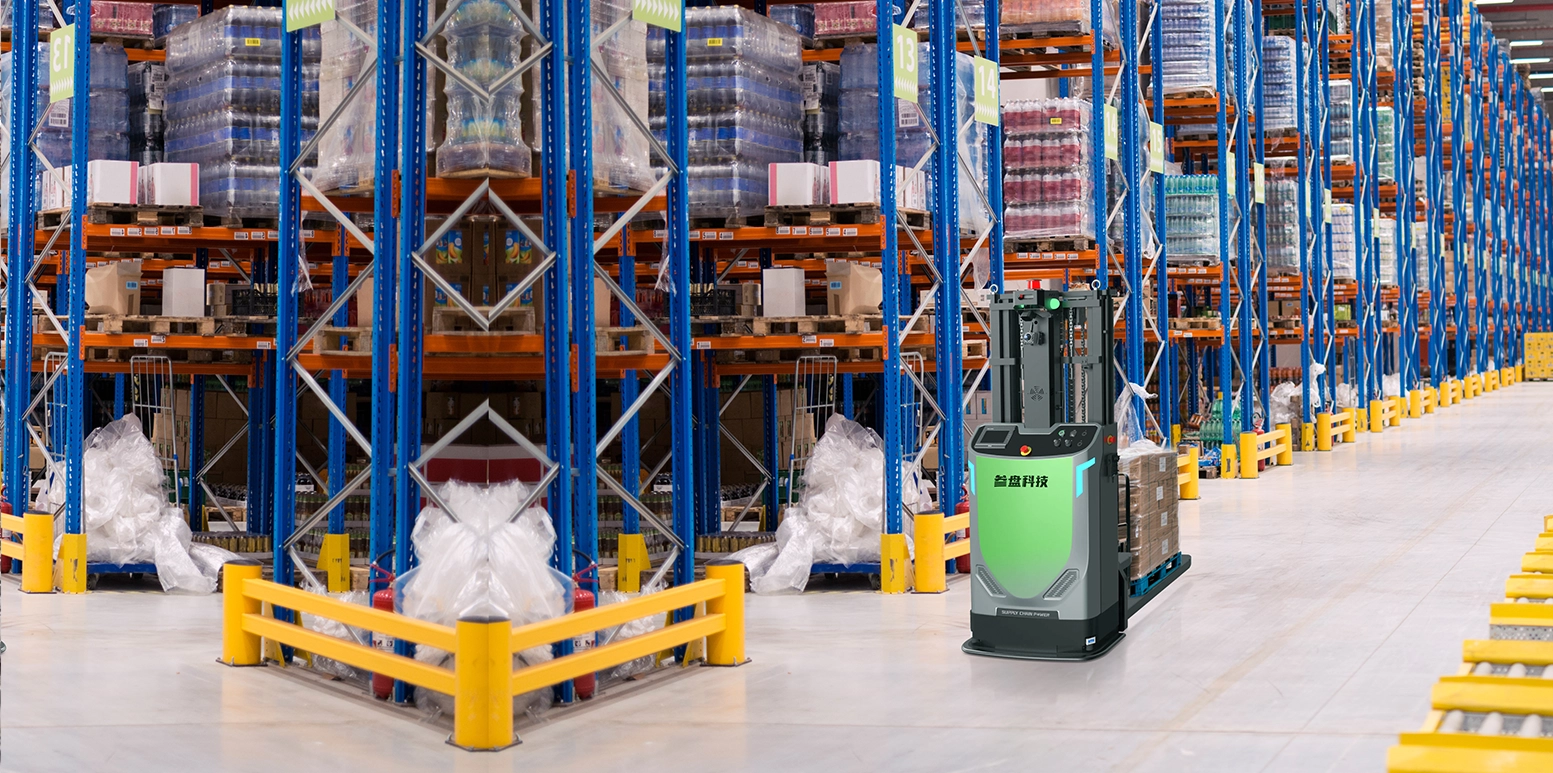
Explore heavy-duty 1.4T–3T autonomous counterbalanced trucks, narrow-aisle stackers, and specialized intelligent sorting terminals manufactured by SCP Technology.


Deploy Enterprise AMR Fleets with Direct Factory Support
Submit your CAD floor drawings, payload profiles, and dispatch requirements. SCP Technology’s senior automation engineering team will return a customized 3D fleet simulation, complete BOM specification, and verified ROI payback analysis within 24 business hours.