
Enterprise AMR Robotics & Autonomous Forklifts
Explore heavy-duty autonomous pallet trucks, counterbalance forklifts, and agile stealth top-lifting chassis manufactured for ±5 mm industrial positioning, zero infrastructure overhaul, and continuous 24/7 autonomous logistics.
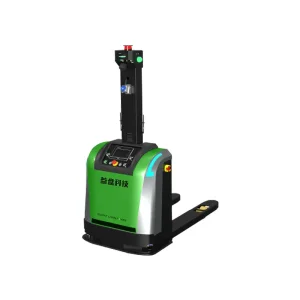

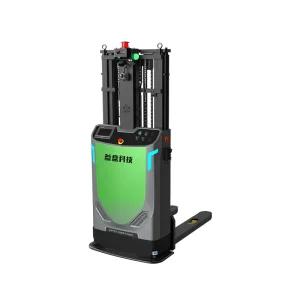
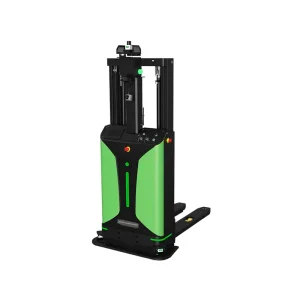
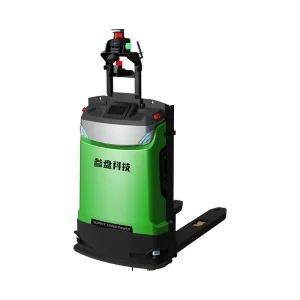

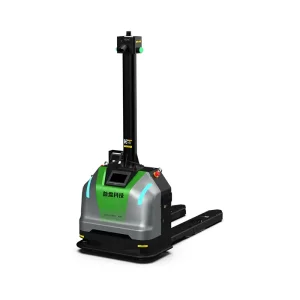
The Global Shift Toward Autonomous Mobile Robotics (AMR)
Industrial manufacturing ecosystems and Tier-1 multi-facility logistics networks are rapidly transitioning from inflexible, legacy automated guided vehicles (AGVs) toward fully dynamic, natural navigation Autonomous Mobile Robots (AMRs).
Navigating the Labor Shortage & Throughput Compression
Global manufacturing and fulfillment hubs in North America, Western Europe, and East Asia confront unprecedented structural labor deficits, escalating occupational safety regulations, and spiraling hourly operational wages. Traditional material handling operations relying on human-operated counterbalanced forklifts and manual pallet jacks carry inherent systemic bottlenecks: operator turnover, erratic shift productivity, warehouse collision liabilities, and severe facility infrastructure damage.
As enterprise operations push toward uninterrupted 24/7/365 lights-out processing, autonomous mobile robotics has matured from a speculative technology into mission-critical infrastructure. The modern supply chain demands hardware and software architectures that integrate seamlessly into complex operational environments without demanding multi-million dollar facility overhaul or floor-reconstruction downtime.
Sichuan Supply Chain Power Chain Technology Co., Ltd. (SCP Technology) engineers next-generation Laser SLAM autonomous forklifts, top-lifting AGV/AMR chassis, and centralized control systems designed specifically to eliminate systemic automation roadblocks for global procurement executives.
| Operational Dimension | Legacy AGV Systems | SCP Laser SLAM AMR Architecture |
|---|---|---|
| Navigation Framework | Reflective tapes, floor QR grids, magnetic strips | Natural contour Laser SLAM + 3D LiDAR vision |
| Site Deployment Period | 3 to 9 months facility retrofitting | 1-day rapid deployment on standard floors |
| Dynamic Obstacle Avoidance | Full stop; waits for obstacle clearing | Real-time autonomous path re-planning (360°) |
| Fleet Orchestration Scalability | Proprietary closed-loop networks | Open API & VDA 5050 compliant fleet routing |
| Repositioning Flexibility | High re-engineering & excavation cost | Instant digital remapping up to 400,000 m² |
Enterprise Evaluation Matrix: Selecting Top AMR Suppliers & OEM Factories
Procuring autonomous mobile robots requires a multi-layered evaluation that goes far beyond equipment specification sheets. Procurement officers must analyze system modularity, total cost of ownership (TCO), safety standards, and multi-system integration capabilities.
1. Functional Safety & Redundancy
Autonomous mobile handling equipment sharing physical workspace with human personnel must comply with rigorous international industrial safety mandates.
- Dual-safety laser scanners with dynamic safety zones
- Category 4, PL-d safety architecture (ISO 13849-1)
- Compliance with EN ISO 3691-4 & ANSI/ITSDF B56.5
- Mechanical safety bumpers with redundant E-Stop relays
- 3D obstacle avoidance cameras for suspended obstacles
2. Software Integration & Fleet Orchestration
Hardware capability is constrained by fleet control intelligence. AMR fleets must plug natively into your active digital enterprise fabric.
- Standardized open REST APIs, WebSockets & Modbus
- Native integration with SAP, Oracle, Manhattan WMS/MES
- Server X Store distributed dynamic dispatch engine
- Intelligent multi-robot dead-lock prevention algorithms
- Continuous Over-The-Air (OTA) firmware updating
3. Deployment Velocity & Payback Period
Long engineering lead-times kill project ROI. Top AMR suppliers deliver rapid pilot-to-production workflows with quantifiable returns.
- No floor excavation, magnetic track, or laser reflectors
- 1-Day rapid commissioning on production-ready floors
- Modular tooling supporting diverse pallet formats
- High-density LiFePO4 batteries with 2-hr fast charging
- Sub-18 month fully capitalized payback realization
Cross-Industry Autonomous Material Handling Architectures
Deploying specialized autonomous industrial vehicles across complex workflows demands customized material handling mechanics, specialized navigation software, and tailored load-carrier recognition systems.
Automotive & Heavy Machinery
Just-In-Time (JIT) and Just-In-Sequence (JIS) line-side delivery requires millimetric docking precision and constant synchronization with MES scheduling.
- AMB-CSW10-BH top-lifting chassis for engine cart transit
- Laser SLAM navigation through high-traffic personnel corridors
- Direct integration with automated cell conveyors & lift gates
- Elimination of assembly line-side component starvation
Cold Chain & Pharmaceutical Storage
Extreme temperature operations (-25°C cold storage) challenge human labor endurance and traditional mechanical components.
- SFL-CDD15-H deep cold-resistant hydraulic components
- Anti-condensation optical sensors and enclosed electronics
- ±5 mm accurate rack placement inside narrow drive-in aisles
- 99% mitigation of high-value cargo damage incidents
FMCG, E-Commerce & Retail Fulfillment
High SKU proliferation and extreme order-picking seasonal spikes demand flexible automated sorting, cross-docking, and pallet handling.
- SFL-CBD15-ZL 3000kg high-capacity horizontal transfer
- Integrated SCP101/SCP100 floor sorting scales with touch terminal
- Continuous round-the-clock replenishment with automatic charging
- Rapid map reconfiguration during seasonal warehouse restructuring
Unified Hardware-Software Stack: The SCC Industrial Controller & Fleet Brain
A resilient AMR system is only as capable as its underlying motion core. SCP Technology builds complete vertical integration—from vehicle motion hardware to macro-level supply chain control towers.
The SCC Core Industrial Motion Controller
At the center of every SCP smart autonomous forklift is the proprietary SCC industrial controller. Integrating multi-axis motion planning, sensory fusion, and real-time safety field processing into a single ruggedized chassis, the SCC controller eliminates third-party component bottlenecks.
- High-speed deterministic CANopen & EtherCAT bus communication
- Integrated SLAM mapping engine processing millions of points per second
- Multi-sensor fusion: Dual LiDAR, 3D ToF cameras, IMU & wheel odometry
- AI deep-learning vision models for real-time pallet pocket pose estimation
Server X Store Fleet Control Tower
Scaling from a 3-robot proof of concept to a 300-robot multi-facility operation demands high-order orchestration. Server X Store coordinates heterogeneous fleets with zero path interference.
- Dynamic spatial reservation prevents intersection bottlenecks
- Automated opportunity-based fast charging management
- Simultaneous management of autonomous forklifts, chassis AMRs & scales
- Real-time telemetry diagnostics with heatmaps and error predictive analytics
Millimeter Precision via Advanced Laser SLAM
Traditional autonomous guidance systems fail when the operational environment experiences dynamic fluctuations. If pallets are stacked irregularly or personnel walk across aisles, outdated systems trigger immediate hard stops, inducing ripple-effect logistics delays.
SCP Technology's Laser SLAM architecture uses advanced natural feature navigation. By extracting stable topological environmental contours (structural columns, architectural walls, heavy fixed racking), our robots maintain reliable ±5 mm positioning accuracy across expansive manufacturing complexes up to 400,000 square meters on a single digital map.
Our deep-learning vision systems dynamically locate and adapt to non-standard, shifted, or damaged pallet pockets. If a pallet has tilted by up to ±15 degrees or moved from its drop coordinate, the vehicle's 3D visual perception recalculates the fork entry vector in milliseconds, executing clean, safe, and autonomous insertion without human intervention.
Worldwide Engineering Standards, Field Support & Export Quality
Overseas deployment requires uncompromised regulatory compliance, reliable hardware component traceability, and dependable regional field support networks across global industrial hubs.
International Safety Directives
Every SCP autonomous machine carries strict international certifications ensuring zero customs delays and full regulatory compliance.
- CE Machinery Directive 2006/42/EC verified
- EMC Directive 2014/30/EU compliance
- ANSI/ITSDF B56.5 safety standard certified
- Over 300 proprietary intellectual property patents & copyrights
Global Deployment Footprint
Operational success verified across 30+ countries and regions throughout Europe, the Americas, Middle East, and Southeast Asia.
- Remote diagnostics and 24/7 technical engineering hotline
- Rapid modular spare parts stocking through regional hubs
- Standardized documentation, wiring schematics & API manuals
- Factory Acceptance Testing (FAT) & Site Acceptance Testing (SAT)
Zero-Retrofit 1-Day Implementation
Our commitment to avoiding infrastructure overhead preserves capital and accelerates project payback.
- No epoxy floor cutting or reflector pole installations
- Rapid SLAM environment scanning with handheld or robot-mounted tools
- Non-invasive integration with automatic doors, elevators & docks
- Turnkey commissioning supported by dedicated applications engineers
Technological Roadmap: The Evolution of Autonomous Mobility
The boundary between pure mobile robotics and autonomous warehouse intelligence is merging. Forward-thinking supply chain directors must evaluate how current hardware investments will interface with upcoming technology standards.
3D Multi-Modal Generative SLAM
Moving beyond planar 2D LiDAR maps, next-era robots build dynamic, semantically tagged 3D point-cloud environments. AMRs understand that an obstacle is not just a spatial barrier, but an operator, a pallet, or a staging zone, altering their speed and clearance profiles dynamically.
Universal VDA 5050 Interoperability
The era of single-vendor proprietary software lock-in is ending. Open standards allow cross-brand mobile robots, stackers, tuggers, and autonomous forklifts to operate under a unified third-party master dispatch tower, enabling enterprise customers to scale fleets without vendor restrictions.
Ultra-Fast Solid-State & 3C Charging
Next-generation lithium and solid-state battery chemistry paired with intelligent automated charging contacts delivers 30-minute full charge cycles, empowering true 24-hour round-the-clock shift continuity with zero human battery swapping requirements.
Heavy-Duty Counterbalance & Narrow-Aisle Smart Forklifts
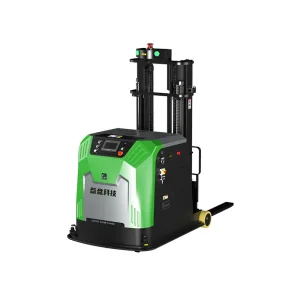
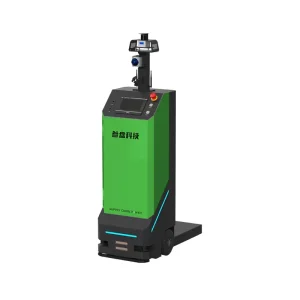
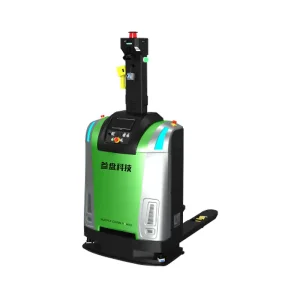
Complete your fleet ecosystem with high-stack narrow-aisle stackers, balanced heavy-tonnage lifters, and custom payload autonomous robots built by SCP Technology factories.
Frequently Asked Questions on AMR Sourcing & Deployment
Comprehensive answers addressing core technical, commercial, and integration criteria for operations and procurement leaders.
What is the primary technical difference between an AGV and an AMR?
An Automated Guided Vehicle (AGV) relies on static external pathways such as magnetic tape, floor-embedded wires, or reflective target reflectors; if an obstacle blocks its line, it halts until an operator removes the obstruction. An Autonomous Mobile Robot (AMR) uses natural Laser SLAM and 3D perception to map the facility dynamically, calculating alternative routes autonomously around obstacles in real-time without floor infrastructure alteration.
How does SCP Technology achieve 1-day rapid deployment on-site?
Because SCP Laser SLAM autonomous forklifts and chassis require zero civil retrofitting (no floor cutting, no beacon installation), an engineer drives or walks the robot through the facility using an intuitive handheld tool. In hours, the vehicle constructs a high-resolution 2D/3D topological map of up to 400,000 square meters. Racks, pick-and-drop stations, and safety corridors are mapped directly into the Server X Store software for immediate task execution.
Can SCP smart robots integrate directly with existing SAP or custom WMS?
Yes. SCP Technology provides an open RESTful API ecosystem, WebSockets, and standard Modbus/TCP industrial interfaces. The SCC core controller and Server X Store fleet software natively handshake with mainstream Enterprise Resource Planning (ERP), Manufacturing Execution Systems (MES), and Warehouse Management Systems (WMS) including SAP, Oracle, and Manhattan Associates.
What return on investment (ROI) payback window can enterprises project?
Deployments historically realize a fully capitalized ROI payback within 12 to 18 months. Financial returns are driven by three compounding levers: total elimination of multi-shift forklift driver vacancy costs, up to 99% reduction in structural and pallet cargo impact damage due to ±5 mm precision docking, and sustained 24/7 autonomous shift execution with zero unscheduled downtime.
What payload capacities and vehicle form factors are manufactured?
Our OEM manufacturing line spans versatile payload classes: 300kg (SFL-300L compact lifters), 1000kg (AMB-CSW10-BH top-lifting stealth robot chassis), 1400kg to 1600kg (SFL-CDD14, SFL-CDD14-H, SFL-CBD16-S horizontal and stacking forklifts), and heavy-duty 2000kg to 3000kg counterbalanced workhorses (SFL-CPD20-Y, SFL-CDD20-Y, and SFL-CPD30-Y) capable of high rack storage.
How does the system ensure safety in mixed human-robot facilities?
Every SCP vehicle incorporates industrial functional safety conforming to Category 4 PL-d / EN ISO 3691-4 regulations. Dual safety LiDAR scanners provide continuous 360-degree field coverage with dynamically adjustable safety, slowdown, and stop fields that expand with travel speed. Additionally, 3D obstacle avoidance cameras identify airborne or suspended hazards, complemented by redundant mechanical safety bumpers and emergency stops.