
Precision Autonomous Forklifts & AMR Chassis (Fleet Series I)
Explore our core tier of Laser SLAM driverless forklifts, pallet movers, and high-precision mobile chassis engineered for reflector-free warehouse operations and high-throughput material dispatch.






Macro Dynamics in Autonomous Mobile Robot & Forklift Engineering
The transition from legacy Automated Guided Vehicles (AGVs) requiring physical floor alterations to agile Autonomous Mobile Robots (AMRs) driven by multi-sensor Laser SLAM algorithms represents a paradigm shift in industrial intralogistics.
Natural Feature Laser SLAM vs. Legacy Infrastructure
Traditional magnetic track, wire guidance, and reflective landmark systems impose massive civil engineering expenditures and rigid operational layouts. Next-generation Laser SLAM (Simultaneous Localization and Mapping) constructs continuous environmental point clouds in real time. Autonomous forklift robots navigate dynamic facility corridors without floor modification, enabling rapid redeployment when supply chain lines adapt to evolving SKUs.
3D Computer Vision & Deep-Learning Pallet Profiling
Irregular load placements, non-standard skids, damaged runners, and skewed pallet entry pockets frequently cause payload drop failures in early-generation automated trucks. Modern AI-powered time-of-flight (ToF) cameras and structured light modules perform sub-millimeter 3D spatial profiling, dynamic pocket localization, and automatic fork-tilt adjustment before mechanical entry, achieving 99.98% pick reliability across diverse pallet types.
Fleet Decentralization & VDA 5050 Interoperability
Modern mega-fulfillment centers require mixed fleets—combining high-bay stackers, horizontal pallet trucks, and low-profile shelf-lifting robots. Standardizing on the VDA 5050 protocol untethers the customer from vendor lock-in. A unified Central Dispatch System (CDS) orchestrates hundreds of autonomous agents, executing global traffic routing, dynamic deadlock resolution, and seamless task handoffs between disparate robotic chassis.
Inside the SCP Engineering Ecosystem: From Silicon to Chassis
Headquartered in Chengdu, China, SCP Technology (Sichuan Supply Chain Power Chain Technology Co., Ltd.) unifies heavy structural fabrication, embedded motion controllers, and enterprise software under one accountable industrial framework.
The Proprietary SCC Core Industrial Robot Controller
At the center of each vehicle resides the proprietary SCC controller—an embedded compute unit engineered specifically for safety-critical industrial material handling. The SCC unit manages high-speed trajectory planning, multi-axis motor kinematics, dual-channel CAN bus telemetry, and functional safety inputs. Rather than relying on generic PLCs spliced together with consumer-grade IPCs, our controller architecture ensures deterministic microsecond response times and military-grade resistance to industrial electromagnetic noise.
Server X Store: High-Concurrency Fleet Intelligence
The Server X Store software platform coordinates enterprise warehouse operations with field assets. Featuring open RESTful APIs and real-time WebSocket links, it synchronizes out-of-the-box with SAP, Oracle, Manhattan Associates, and custom MES architectures. Server X Store maps up to 400,000 square meters in a unified coordinate frame, calculating non-conflicting multi-agent paths, automated opportunity battery charging, and intelligent load-buffer slotting without human supervisor intervention.
| Performance Specification | SCP Factory Standard | Conventional Industry AGVs | Procurement Advantage |
|---|---|---|---|
| Navigation Mode | Natural Laser SLAM + 3D Vision Fusion | Magnetic Tape / QR Code Grid / Reflectors | Zero civil retrofit; 1-day deployment |
| Docking Repeatability | ±5 mm linear, ±0.5° angular | ±15 mm to ±25 mm linear | 99% reduction in pallet drop & rack impact |
| Mapping Envelope | Up to 400,000 m² continuous single-map | Limited to 30,000 – 50,000 m² fragments | Ideal for massive gigafactories & 3PL hubs |
| Energy Management | 2-min hot-swap + 2-hour 1C fast charge | Slow manual tethered charge (6–8 hrs) | True 24/7/365 uninterrupted availability |
| Software Integration | Native Open API / VDA 5050 (MES/WMS) | Proprietary closed protocol / Custom middleware | Eliminates vendor lock-in; lowers integration cost |
| Capital Payback (ROI) | Targeted under 18 months | 36 to 48 months (high integrator margins) | Direct OEM factory pricing delivers rapid ROI |
Total Cost of Ownership (TCO) & Supply Chain Risk Mitigation
Procuring automated handling fleets requires rigorous financial analysis beyond initial CapEx. When evaluating automated forklift robot suppliers, procurement directors must evaluate long-term OpEx, system flexibility, and operational safety liabilities.
Direct OEM Pricing vs. Integrator Markups
Traditional warehouse automation relies on multi-tier integration layers where third-party resellers white-label generic forklifts, adding 40% to 70% in middleman software markups. SCP Technology operates an integrated R&D and manufacturing complex in Sichuan, offering direct factory quotes, turnkey commissioning, and direct spare parts fulfillment without commercial bloat.
Quantifying Operational Expenditure Reductions
Manual forklift operations incur recurring operational liabilities: rising licensed driver wages, mandatory overtime, shift turnover, worker compensation claims, and incidental rack and product collisions. SCP autonomous forklifts eliminate driver availability bottlenecks, allowing operations to scale to 3 shifts with zero staffing overhead while reducing pallet load damage by up to 99%.
Zero Retrofit Deployment Velocity
Civil infrastructure construction (drilling reflector targets, embedding magnetic floor markers, laying wire guides) can suspend facility operations for 8 to 16 weeks, costing millions in lost output. Because SCP vehicles utilize natural feature Laser SLAM, initial path mapping and live fleet testing can be achieved in as little as 24 hours on compatible floors, eliminating factory shutdown losses.
Macro Industry Solutions & Factory Application Blueprints
Across more than 20 industrial sectors in 30+ countries, SCP autonomous forklifts and smart mobile robots solve intralogistics friction points with tailored application templates.
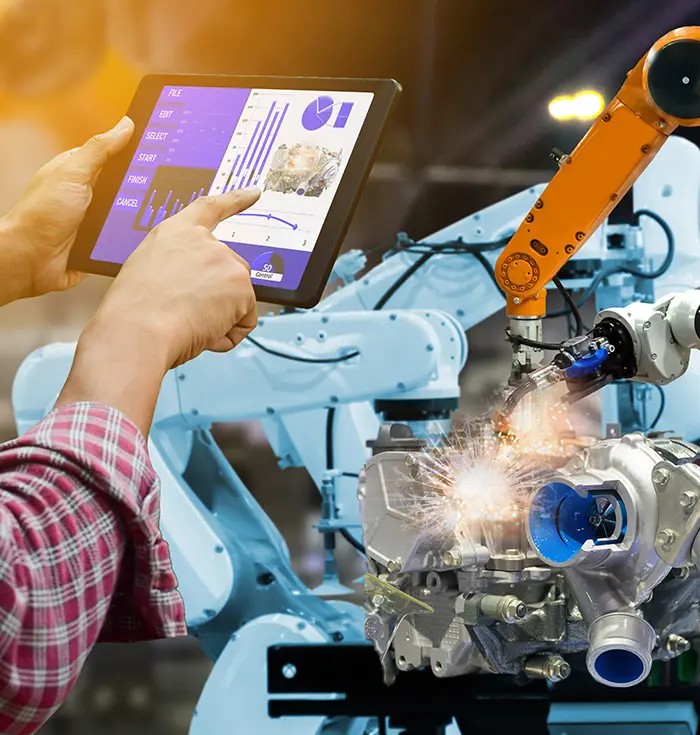
Automotive & Precision Discrete Manufacturing
Eliminate line-side starvation and staging buffer congestion with synchronized Just-In-Time (JIT) and Just-In-Sequence (JIS) pallet delivery direct to assembly cells.
- MES Dynamic Synchronization: Robots adapt automatically to changing takt times and mixed-model production sequences.
- Narrow-Aisle Agility: SFL-CBD15-ZL and AMB-CSW10-BH maneuver through dense assembly corridors under 1.8 meters wide.
- Zero Workstation Starvation: Automated call buttons and optical sensors trigger buffer replenishment without human operator calls.
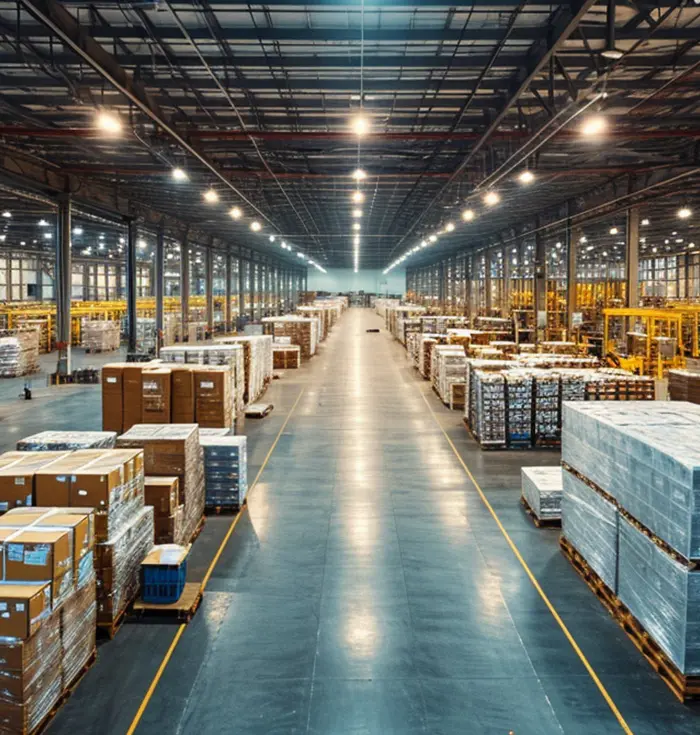
High-Throughput Logistics & 3PL Fulfillment Hubs
Solve extreme volume volatility during peak seasonal demands with 24/7 automated cross-docking, high-density put-away, and high-speed outbound trailer staging.
- High-Bay Stacking: SFL-CDD15 and SFL-CDD20-Y stack payloads up to 3 meters with precision visual load-centering.
- High Cruising Speeds: Top travel speed of 2.0 m/s maintains dock-to-rack transit cycles during high inbound surges.
- Continuous Fleet Duty: Automated opportunity charging during idle dispatch windows delivers continuous operation.
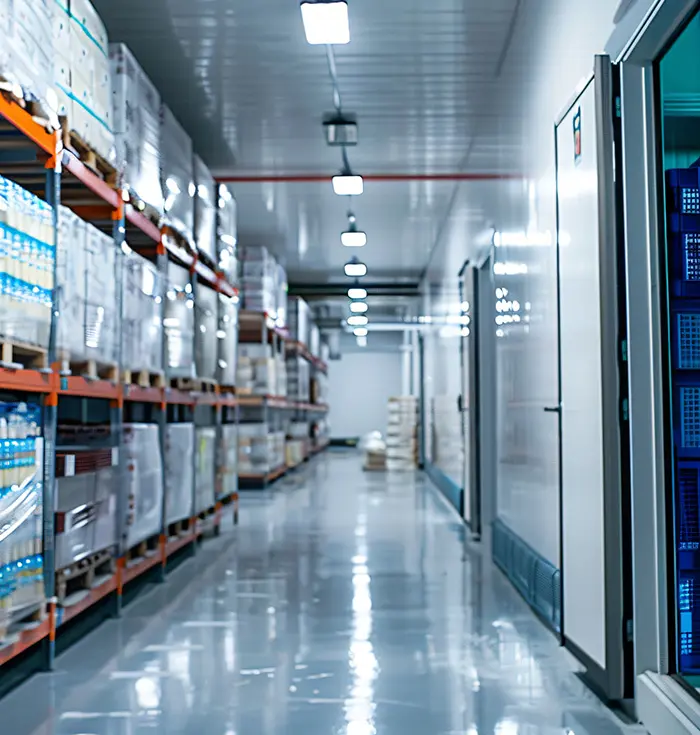
Cold Chain, Pharmaceuticals & Clean Food Processing
Eliminate human occupational exposure in sub-zero freezer vaults while preventing temperature fluctuations and moisture-induced cargo damage.
- Sub-Zero Thermal Packages: Heated sensor enclosures, low-temp lubricants, and insulated lithium battery compartments.
- Hygiene-First Operation: Electric hydraulic lifting without toxic exhaust emissions meets strict FDA and EU cleanroom requirements.
- Gentle Handling: Software-limited acceleration profiles prevent fluid sloshing and fragile cold carton breakage.
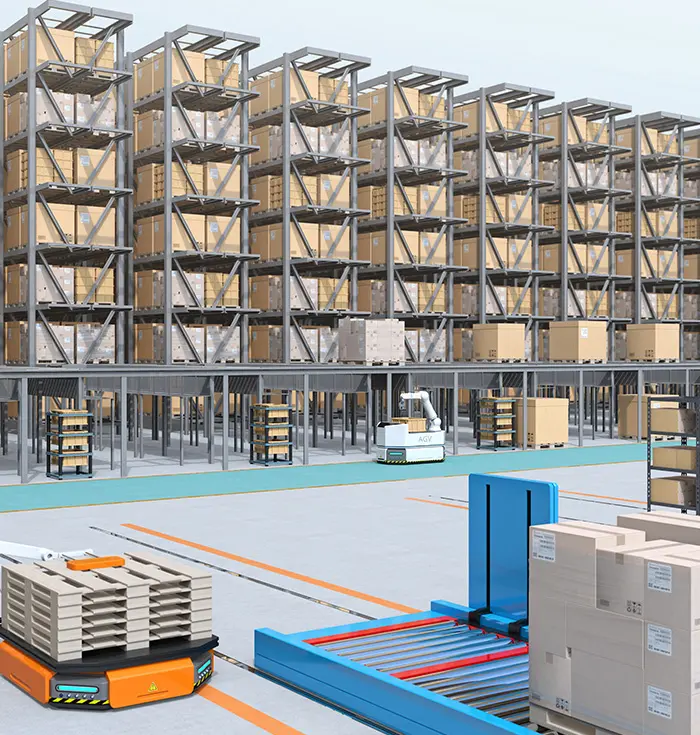
FMCG Supermarket Chains & Omnichannel Replenishment
Unify weigh-check verification, sorting scales, and automated transport into an automated store-replenishment pipeline.
- Integrated Sorting Scales: SCP101 / SCP100 dynamic weighing terminals verify pick weights and print labels automatically.
- Multi-Carrier Compatibility: Automatic recognition for wooden pallets, plastic totes, wire cages, and rolling dollies.
- Dynamic Buffer Dispatch: Floor buffers clear continuously to staging docks, preventing retail fulfillment bottlenecks.
Functional Safety & International Certification Compliance
Industrial autonomous forklifts operate in shared work environments alongside human staff and manual rolling equipment. Every SCP vehicle incorporates redundant safety hardware and deterministic fail-safe architectures.
ISO 3691-4 & CE Machinery Directive
Fully compliant with ISO 3691-4:2020 (Driverless industrial trucks and their systems) and the European CE Machinery Directive 2006/42/EC. Safety critical motion controllers meet Performance Level d (PL-d) Cat. 3 requirements with verified dual-channel circuit redundancy.
360° Multi-Layer Active Sensor Coverage
Dual safety-rated LiDAR sensors, front 3D visual obstacle detection modules, ultrasonic proximity rangefinders, and physical mechanical safety contact edges create dynamic slowing and emergency-stop envelopes that automatically expand based on vehicle velocity.
Intelligent Lithium BMS & Thermal Cutoff
Equipped with automotive-grade LiFePO4 cells paired with a multi-node battery management system. Continuous microsecond surveillance tracks internal cell temperatures, individual voltage differentials, and over-current states with automatic thermal circuit disconnect.
The 4-Stage Zero-Risk Deployment Protocol
A structured execution framework ensures transparency from site feasibility surveys through live autonomous fleet handover.
Facility Feasibility & CAD Layout Audit
We review your warehouse CAD drawings, floor flatness ratings, pallet dimensions, aisle widths, pick/drop point frequencies, and host WMS interface requirements.
Kinematic Simulation & Fleet Sizing
Our automation engineers build a digital twin simulation of your facility to evaluate travel cycles, calculate optimal vehicle quantities, plan charging locations, and define ROI.
Factory Acceptance & Rapid Mapping
Vehicles are built and quality-audited at our Chengdu factory. On-site deployment uses Laser SLAM mapping with zero physical floor alterations—frequently running within 24 to 48 hours.
WMS Integration & 24/7 Handover
We connect the SCC controller with your enterprise IT systems via open APIs, train internal facility managers, and hand over ongoing operation backed by our global support network.
Engineering Roadmap: Autonomous Intralogistics Toward 2030
As global supply chains adopt lights-out smart factories, material handling robotics will evolve from pre-programmed path followers into fully cognitive, self-optimizing logistics systems.
Vision-Language-Action (VLA) AI Models
Integrating transformer-based multimodal vision models directly into edge controllers allows robots to understand dynamic facility environments contextually. Instead of stopping for unclassified obstacles, autonomous forklifts can distinguish between temporary paper debris (safe to drive over) and fallen freight (requiring immediate route evasion), minimizing unnecessary dispatch interruptions.
5G-Advanced & Time-Sensitive Networking (TSN)
Industrial Wi-Fi often suffers from channel congestion, handoff latency drops, and blind zones around structural steel racks. Migrating fleet telemetry to 5G-Advanced private networks and Time-Sensitive Networking guarantees deterministic, ultra-reliable low latency communications (URLLC < 5 ms), enabling centralized multi-robot kinematic coordination across millions of square feet.
Solid-State Energy Storage & Flash Induction
Future iterations of the SFL series will introduce next-generation solid-state battery chemistry and high-power wireless induction pads embedded at routine staging buffer points. This enables opportunity flash-charging during routine 30-second pallet drop cycles, effectively eliminating dedicated battery rooms and battery swap procedures.
Intelligent Handling & High-Reach Stacker Solutions (Fleet Series II)
Complete your facility automation project with our heavy-capacity transporters, narrow-aisle stackers, and specialized intelligent sorting units engineered for high-density warehouse environments.




Frequently Asked Questions by Overseas Buyers & Integrators
Key technical, financial, and operational answers for evaluating automated forklift robot suppliers and factory capabilities.
What navigation technology do SCP autonomous forklifts use?
Can SCP robots integrate with our existing WMS, MES, or ERP?
How long does it take to deploy an autonomous forklift project?
What payback period can buyers expect?
Which load capacities and models are currently available?
• 1.0 Ton: AMB-CSW10-BH low-profile mobile robot chassis for stealth top-lifting.
• 1.4 Ton – 1.6 Ton: SFL-CDD14-H, SFL-CDD16, and SFL-CBD16-S stackers and pallet movers with up to 3 m lift height.
• 1.5 Ton: SFL-CBD15-ZL narrow-aisle handling forklift.
• 2.0 Ton: SFL-CPD20-Y counterbalanced forklift (1180 mm narrow body) and SFL-CBD20 / SFL-CDD20-Y stackers.
• 3.0 Ton: SFL-CBD30 heavy-duty precision transport series.