
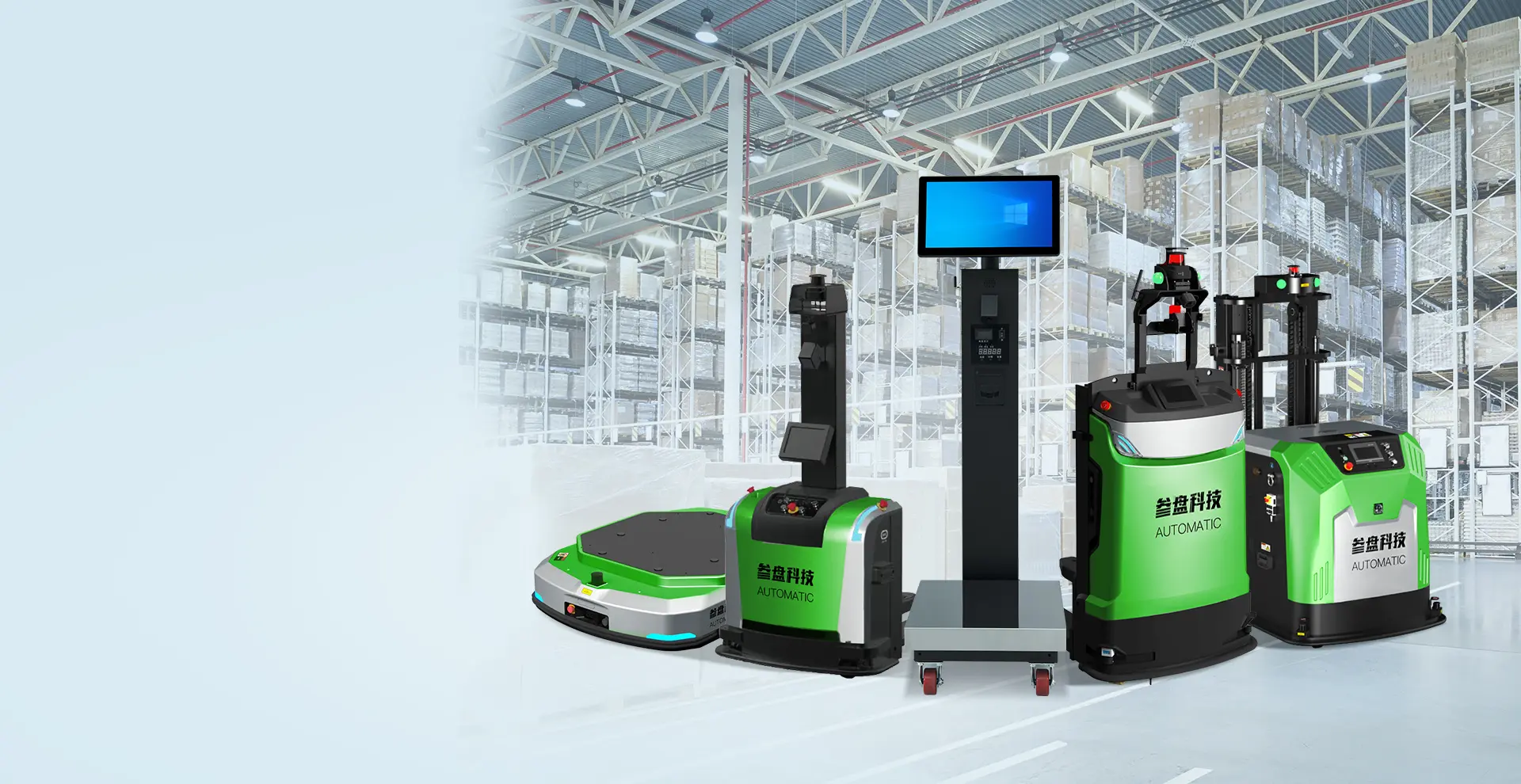
High-Precision Laser SLAM Hardware Portfolio
Explore production-tested autonomous forklifts engineered by SCP Technology (Sichuan Supply Chain Power Chain Technology Co., Ltd.), featuring reflector-free spatial positioning, ±5 mm precision docking, and open WMS/MES connectivity.






Evolution of Industrial Laser Guided Navigation: From Targets to Natural SLAM
A rigorous examination of laser navigation modalities, detailing why tier-1 global facilities are shifting from rigid reflector triangulation to high-density point cloud Natural Feature Laser SLAM.
The Legacy Constraint: Reflector-Based Triangulation (LGV)
For over two decades, automated guided vehicles (AGVs) relied on optical triangulation against retro-reflective prisms affixed to facility walls and racking uprights. While this mechanism delivers sub-centimeter positional certainty in static environments, it imposes substantial operational overhead. Plant retooling, rack movements, or accidental reflector obscuration by stacked inventory immediately degrades navigation integrity, often precipitating complete line stoppages.
Furthermore, the capital cost of surveying, installing, and certifying hundreds of optical targets across a 50,000 m² distribution warehouse can represent up to 25% of total project commissioning expenses.
| Navigation Metric | Reflector Triangulation (LGV) | 2D Natural Laser SLAM | SCP Hybrid 3D LiDAR + Vision SLAM |
|---|---|---|---|
| Infrastructure Requirement | Optical targets / prisms every 8-15m | Zero external infrastructure | 100% Zero-Retrofit Infrastructure |
| Docking Precision | ±5 mm to ±10 mm | ±10 mm to ±15 mm | ±5 mm (Multi-Sensor Fusion) |
| Commissioning Timeline | 4 to 8 weeks per 10,000 m² | 3 to 7 days | 1 Day Rapid Deployment |
| Dynamic Environment Adaptability | Poor (< 20% change threshold) | Moderate (30-40% change tolerance) | High (> 60% dynamic flow tolerance) |
| Obstacle Volumetric Detection | Planar slice only (Safety scanners) | Planar slice (2D) | Volumetric 3D ToF + Deep Learning |
| Fleet Scalability Cap | Rigid fixed routing | Semi-dynamic rerouting | Full Autonomous Dynamic Swarm |
Inside the Core Controller: The Brain of Autonomous Execution
How the SCP SCC industrial core controller, dual-laser architectures, and Server X Store fleet orchestrator combine to execute high-density pallet movements with zero human intervention.
SCC Controller Hard Real-Time Stack
Built upon a deterministic real-time operating system (RTOS) coupled with embedded Linux, the SCC controller processes LiDAR scan data at 50Hz. Kinematic control loops compute steering vectors and wheel torque in microseconds, eliminating overshoot and ensuring crisp trajectory alignment in 1.8m narrow aisles.
AI 3D Deep-Learning Pallet Profiling
Manual operations frequently suffer from misaligned, degraded, or non-standard pallets. SCP’s fork-tip 3D vision cameras utilize neural networks to instantly identify fork pocket angles, pallet pitch, and pallet tilt, dynamically adjusting fork elevation and side-shift to guarantee 100% first-pass insertion success.
Server X Store Fleet Dispatch Engine
A centralized orchestration middleware capable of commanding fleets in excess of 200 mobile units. Server X Store performs global topological traffic routing, dead-lock preemption algorithms, dynamic battery reserve monitoring, and auto-dispatching based on pending WMS buffer priorities.
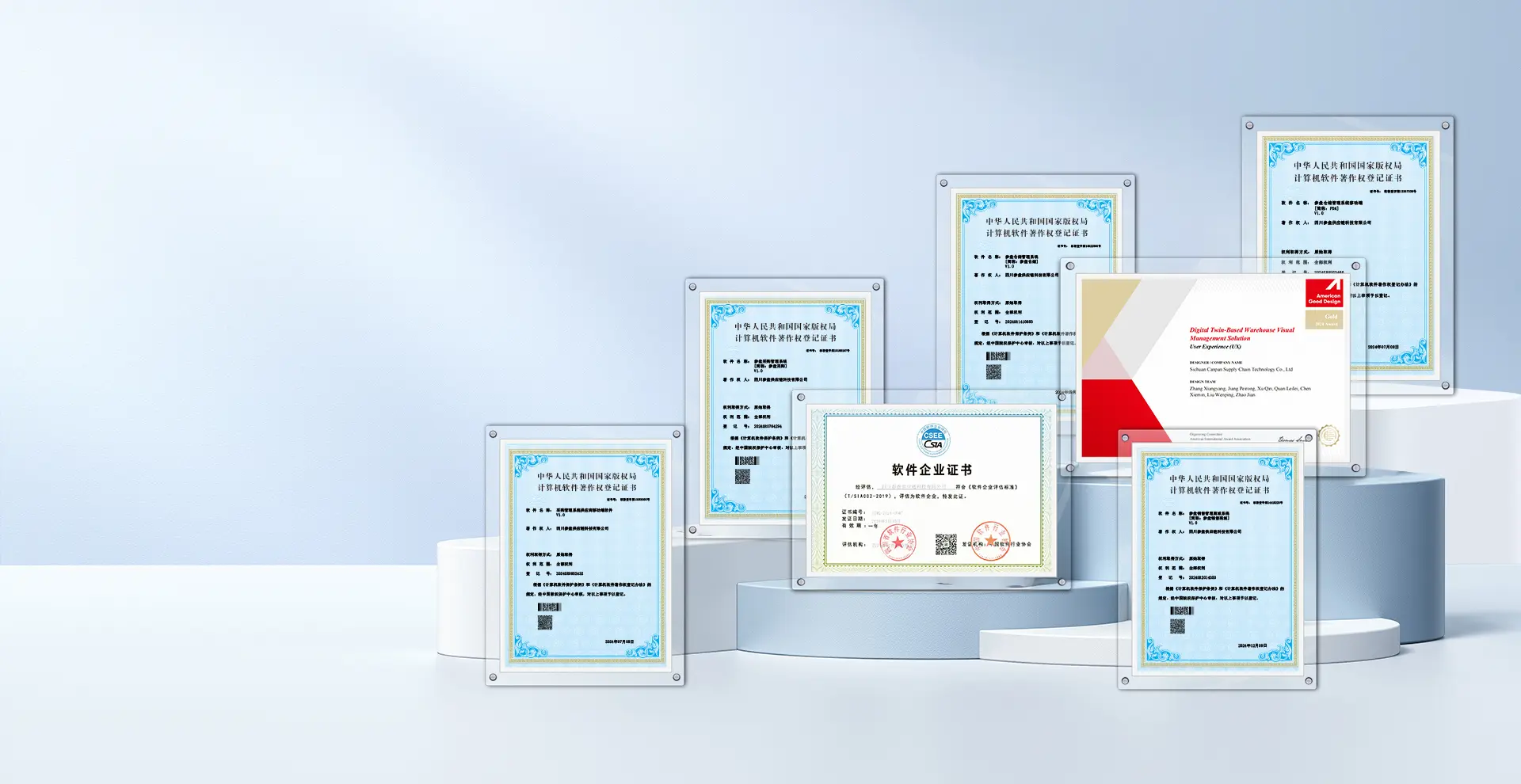
China Factory 4.0: Structural Cost Advantage & Full-Stack Supply Chain Control
Western automation buyers routinely encounter extreme lead times exceeding 9 to 14 months and inflated capital expenditure from European or American AGV system integrators. By anchoring manufacturing and R&D in Chengdu, SCP Technology capitalizes on China’s mature industrial cluster for robotics hardware, precision metal fabrication, high-discharge LFP (Lithium Iron Phosphate) cells, and domestic semiconductor packaging.
- Vertical Hardware Integration: In-house production of robot chassis, mast assemblies, and high-frequency battery swapping mechanisms delivers 40-50% lower CAPEX than legacy Western OEMs.
- Short Lead Times: Standard Laser SLAM pallet trucks (e.g., SFL-CBD15-ZL) ship within 4 to 6 weeks, supported by continuous automated assembly lines and burn-in validation bays.
- Rigorous ISO 9001 Quality Benchmarks: Every autonomous forklift undergoes a continuous 72-hour full-load stress run, laser interferometer calibration, and multi-angle dynamic drop simulation prior to crating.
Macro Industry Solutions: Mission-Critical Automation Scenarios
Tailored intralogistics configurations designed to eliminate bottlenecks, sanitize cleanroom environments, and maintain 24/7 continuous throughput.
Automotive & Discrete Assembly
Just-in-Time (JIT) line-side feeding. Compact chassis like the AMB-CSW10-BH interface with conveyor roller heads, shuttling heavy component skids directly to robotic assembly cells with zero production stops.
FMCG & High-Throughput Warehousing
Round-the-clock inbound staging and dock-to-rack put-away. High-speed 2.0 m/s transit velocity paired with rapid automatic opportunistic opportunity charging mitigates driver absenteeism during peak seasons.
Cold Chain Storage (-25°C)
Hermetically sealed internal drive compartments, heated optical windows for LiDAR safety scanners, and low-temperature LFP chemistries engineered to eliminate condensation and thermal drift in deep freeze facilities.
Pharma & Cleanroom Facilities
Zero particulate emissions with non-marking polyurethane drive tires and sealed electric mast hydraulics. Fully compliant with strict GMP cleanroom contamination protocols and food hygiene directives.

Flexible Line-Side Automation
Dynamic re-routing around temporary obstacles, manual workers, and auxiliary carts without system locks.

Pallet High-Bay Reach
High-precision vertical lift encoders guarantee millimeter mast alignment up to 4.5m rack configurations.
Global Enterprise Procurement: TCO Analysis & RFP Specification
A pragmatic decision framework for Chief Operations Officers and Supply Chain Directors evaluating autonomous forklift investments against manual fleet leases.
Comprehensive TCO Modeling
While manual forklifts appear low in CAPEX, their 3-year OPEX is overwhelmed by certified operator wages, shift differentials, recruitment attrition, and pallet impact damages. SCP Laser SLAM fleets routinely compress multi-shift operational expenses by 68%, delivering net payback within 12 to 18 months.
Open WMS / MES Interfacing
Avoid vendor lock-in. SCP’s software suite provides RESTful APIs, MQTT publish-subscribe topics, and native VDA 5050 protocol support. Whether interfacing with SAP EWM, Manhattan Associates, or proprietary in-house MES, task dispatching happens without customized proprietary gateways.
Vendor Auditing Checklist
Global procurement must demand verified mean-time-between-failure (MTBF > 5,000 hours), dynamic safety laser reaction latency under 60ms, thermal dissipation data under continuous 2.0-ton cycles, and local technical escrow provisions for critical firmware and software stacks.
The 4-Stage Deployment Path
Analysis of CAD floorplans, pallet typology, aisle widths, floor flatness (DIN 18202), and peak throughput curves.
Specification of pallet trucks, counterbalanced forks, or stackers, along with auto-charging dock placement and battery sizing.
Autonomous vehicle scans the facility environment. Grid maps are compiled in hours with zero reflector hardware mounted.
Integration with customer WMS via open APIs, dry-run safety validation, dynamic avoidance sign-off, and handoff to operations.
Localized Support Framework & International Compliance
Operating driverless industrial equipment requires strict adherence to international safety directives. SCP Technology ensures certified compliance across all global jurisdictions.
ISO 3691-4 & CE Machinery Directive
Full conformance with EN ISO 3691-4:2023 (Driverless Industrial Trucks and Their Systems). Equipped with dual-channel category 3, PL-d functional safety architecture, dynamic laser safety zones, and fail-safe mechanical e-stops.
ANSI/ITSDF B56.5 & OSHA Compliance
Pre-configured for North American installations in accordance with ANSI/ITSDF B56.5 standards. Includes visible flashing perimeter warning beacons, audible directional buzzers, and automated emergency braking triggers.
Global SLA & Telemetry Escrow
Remote diagnostics via encrypted cellular or VPN tunnels allow SCP Tier-3 systems engineers to analyze real-time CAN bus telemetry, tune SLAM algorithms, and push over-the-air (OTA) updates with guaranteed 4-hour technical response times.
Need Local Integration Support or Spare Parts Catalog?
SCP maintains strategic field engineering partners across North America, Europe, Southeast Asia, and the Middle East.
Technology Roadmap (2025–2030): Swarm Intelligence & 3D Solid-State LiDAR
How emergent breakthroughs in edge compute, 5G-Advanced URLLC, and multimodal visual models are reshaping future Laser SLAM autonomous intralogistics.
5G-Advanced URLLC Swarming
Transitioning from Wi-Fi roam handovers to 5G Industrial Private Networks. Ultra-Reliable Low-Latency Communication (< 1ms latency) enables shared distributed point clouds among nearby AGVs, enabling real-time cooperative collision evasion at blind intersections.
Solid-State 3D Flash LiDAR
Eliminating spinning mechanical LiDAR mirrors. Solid-state flash components dramatically elevate shock tolerance, reduce sensor unit costs, and deliver dense true-3D volumetric spatial scanning capable of micro-obstacle profiling (such as stray banding wires).
Large Spatial Multimodal Models
Empowering autonomous forklifts with contextual semantic understanding. Future AGVs will not merely navigate geometry; they will classify irregular cargo overhangs, read degraded human hazard markings, and auto-negotiate right-of-way via edge computer vision.
High-Capacity & Narrow-Aisle Laser Guided Forklifts
Complete your fleet deployment with high-reach stackers, heavy counterbalanced vehicles, and ultra-narrow aisle handling robots engineered to order in China’s premier robotics hub.



Frequently Answered Engineering Questions
Comprehensive answers addressing navigation repeatability, safety redundancies, environmental limits, and brownfield installation requirements.
How does SCP Laser SLAM maintain ±5 mm precision without reflectors?
What floor flatness and surface conditions are mandatory for deployment?
Can these autonomous forklifts operate in environments with human pedestrian traffic?
What are the battery cycle life, charging speeds, and continuous runtimes?
How does integration with enterprise ERP, WMS, and MES platforms occur?
What is the deployment procedure and timeline for a brownfield warehouse?
Accelerate Your Facility’s Transition to Lights-Out Material Handling
Partner directly with China’s premier engineering factory and manufacturer of Laser SLAM autonomous guided vehicles. Contact our senior robotics application team for custom payloads, narrow aisle clearances, and turnkey fleet simulations.