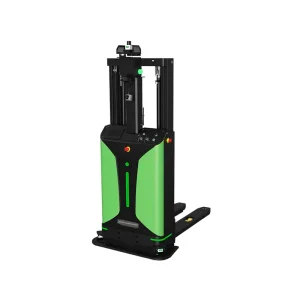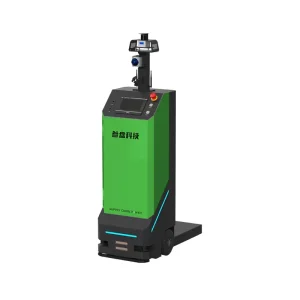
High-Efficiency Autonomous Handling Equipment
Explore heavy-payload de-picking AGVs, Laser SLAM counterbalance units, and agile automated pallet handlers.
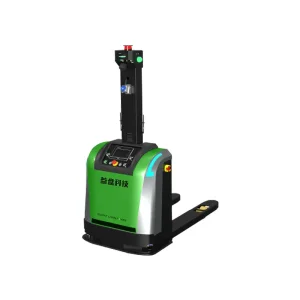
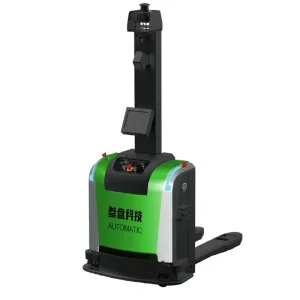
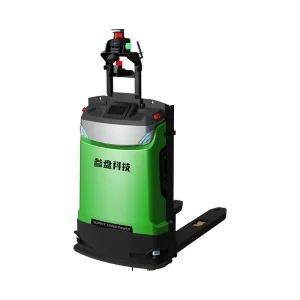
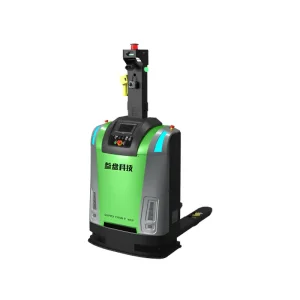
Macro-Industry Paradigm: Engineering Robot De-Picking Systems
Transitioning modern supply chain distribution centers from manual depalletizing friction to fully integrated, multi-agent automated orchestration.
Perceptual AI & Dynamic De-Palletizing
Traditional picking configurations fail when dealing with non-standard carton overhang, shifted layers, or mixed packaging skids. Next-generation robot de-picking systems utilize high-resolution 3D point cloud camera arrays fused with deep learning models, enabling millimeter-accurate end-effector placement and dynamic skew compensation.
Fleet Interoperability (VDA 5050 Standard)
Modern distribution hubs cannot operate as isolated automation islands. Factory-engineered robot de-picking fleets natively interface with multi-vendor AGVs and AMRs through open API endpoints, facilitating unified traffic management between horizontal pallet transport, automated buffer staging, and vertical stacker bays.
Dynamic Workcell Throughput Optimization
Eliminate throughput bottlenecks at the depalletizing boundary. By implementing predictive algorithmic handshakes between autonomous reach trucks and stationary robotic picking cells, material feed cycles are balanced in real-time, achieving cycle efficiencies exceeding 850 picks per cell hour without human intervention.
Global Industrial Landscape & Supply Chain Resilience
Analyzing the strategic macro-economic drivers compelling global logistics operators to adopt turnkey robotic de-picking machinery.
Structural Warehouse Labor Deficits
With operational turnover rates in traditional sorting and depalletizing facilities topping 45% annually across North America and Western Europe, direct automated infrastructure replaces volatile ergonomic stress points with high-availability, 24/7 continuous throughput machinery.
Escalating SKU Complexity & Velocity
Omnichannel fulfillment mandates dynamic depalletizing of varied carton densities, fragile packaging materials, and unpredictable stacking patterns. Turnkey OEM manufacturers deliver specialized pneumatic, magnetic, and mechanical grip modularity designed to accommodate mixed-case streams.
Zero-Downtime Factory Direct Deployment
Leading enterprises bypass fragmented integrator markups by partnering directly with production factories. Proprietary Laser SLAM software suites eliminate fixed structural targets, reducing project commissioning timelines from standard six-month windows to single-digit deployment days.
Localized Support & Global Compliance Frameworks
Ensuring end-to-end operational viability, functional safety validation, and seamless localized maintenance ecosystems.
ISO 3691-4 & CE Machinery
Comprehensive safety PL-d certification, dual Category 4 safety circuits, integrated LiDAR curtain interlocks, and redundant hardware watchdogs safeguarding human-robot co-working environments.
Regional Spare Parts Depots
Standardized modular mechanical components and critical drive controllers stocked within strategic regional hubs across North America, the EU, and APAC to guarantee 24-hour critical part dispatch.
Certified Field Engineering
Factory-trained mechanical and systems engineers delivering on-site system integration, precise sensor calibration, load-testing scenarios, and local workforce operations training.
Direct WMS/ERP Orchestration
Pre-engineered RESTful APIs, MQTT protocol pipelines, and certified SAP/Manhattan interfaces guaranteeing rapid data sync without third-party middleware fees.
High-Yield Deployment Scenarios in Real-World Operations
Field-proven deployments demonstrating high-reliability robotic de-picking and material flow integration.
FMCG & Retail Cross-Docking
Processing mixed incoming pallets at receiving staging areas. Autonomous de-picking robots identify variable carton profiles directly from pallets delivered by Laser SLAM smart forklifts, singularizing cartons onto automated sortation conveyors for rapid line distribution.
Cold Storage & Deep-Freeze Hubs
Operating continuously down to -25°C without operator fatigue or refrigeration compromise. Specialized thermal mitigation systems and protected vision sensors eliminate condensation errors, facilitating continuous pallet breakdown in severe temperature environments.
Automotive Production Line-Side Feeding
Delivering high-precision parts presentation directly to the assembly staging line. Heavy-load robotic systems destack specialized steel bins and kitted components with ±5 mm precision, feeding sequenced work cells without production delays.
Engineering Roadmap: The Next Frontier in Robot De-Picking
Architecting self-optimizing material handling hardware, foundation vision models, and collaborative fleet intelligence.
Zero-Shot Spatial AI Gripping
Integration of advanced spatial transformer foundation models directly on the edge controller. The system achieves automated picking validation for completely unseen product profiles, polybags, and shifting loads without prior 3D model training.
Symbiotic Mobile Manipulation
Fusing high-payload AMR chassis with 7-axis robotic arms for dynamic, untethered mobile de-picking across large footprint warehouses. Robots navigate narrow aisles, access high racks, and unpack mixed pallets directly at the storage location.
Autonomous Swarm Optimization
Cloud-native fleet coordination powered by decentralized swarm intelligence algorithms. Pallet transport AMRs, automated de-picking cells, and automated vertical stackers continuously self-balance workload distributions to eliminate bottlenecks before they form.
Frequently Answered Technical Questions
Essential guidance for automation directors, facility managers, and procurement leads evaluating robot de-picking systems.
How do robot de-picking manufacturers address shifted or damaged pallet loads?
What separates factory-direct manufacturers from standard automation integrators?
Can these systems be deployed without structural changes to the warehouse facility?
What end-effector tooling options are available for diverse packaging materials?
What is the realistic capital recovery timeline for industrial automated picking cells?
Precision Autonomous Forklifts & Transport Platforms
Direct manufacturer supply for high-stacking, narrow-aisle, and balanced heavy-duty autonomous material handling.