
Featured Autonomous Forklifts & Material Handling Systems
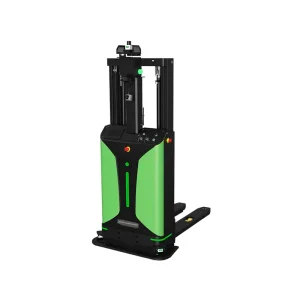
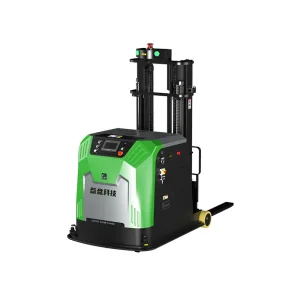
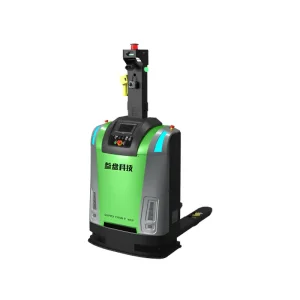
Direct factory supply from SCP Technology: Autonomous guided forklifts engineered with reflector-free Laser SLAM navigation, ±5 mm docking accuracy, and rapid zero-retrofit implementation.
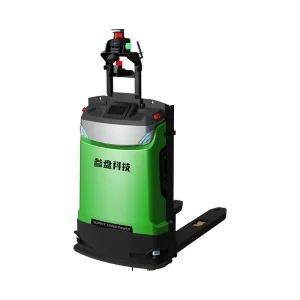
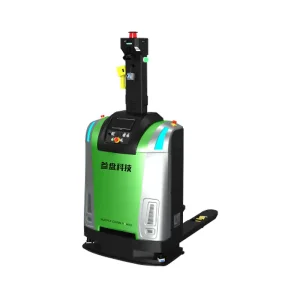

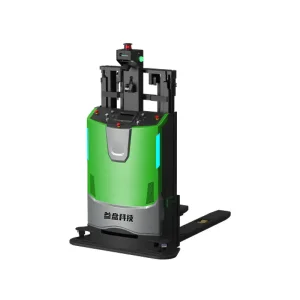
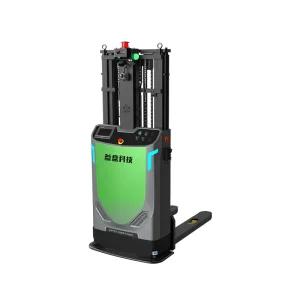
The Paradigm Shift in Commercial & Industrial Material Handling
Autonomous Mobile Robots (AMRs) and Laser SLAM automated guided forklifts have moved from exploratory pilot tests to business-critical operational infrastructure across Europe, North America, and the Asia-Pacific region.
Structural Labor Shortages
Warehousing operations worldwide face chronic shortages of certified forklift operators, with annual turnover exceeding 40% in Western logistics corridors. Robotic automation replaces volatile variable wage expenses with predictable, fixed-cost mechanical uptime.
High-Density Pallet Throughput
Rising industrial real estate lease rates force warehouse operators to increase rack heights and compress working aisle widths. Autonomous narrow-aisle stackers optimize floor space utilization by up to 35% without risking human collision or rack shearing.
Lights-Out 24/7 Supply Chains
Modern manufacturing paradigms mandate uninterrupted line-side replenishment and cross-docking operations. Smart autonomous forklifts operate in zero-light, sub-zero cold chain environments without heating or human shift transitions.
Why Global Enterprises Source Robotic Automation from China
The convergence of complete electromechanical supply clusters, advanced algorithmic computing, and rapid factory-floor iterations allows SCP Technology to offer Tier-1 robotics at disruptive lifecycle cost economics.
Full-Stack Component Ecosystem
Within a 150-kilometer radius of our manufacturing facilities, 98% of all critical robotic hardware components—including LiDAR sensors, precision planetary reducers, brushless servo drives, lithium iron phosphate (LiFePO4) battery packs, and mast steel castings—are manufactured and stress-tested.
Rapid 1-Day Site Commissioning
Unlike legacy European AGV setups requiring months of civil floor remodeling, magnetic ribbon taping, and reflective laser prism installation, SCP's natural-feature Laser SLAM technology dynamically maps up to 400,000 square meters on Day One without infrastructure overhaul.
Substantial Total Cost of Ownership
By controlling in-house hardware engineering, software kernel development (SCC Controller), and modular chassis assembly, SCP delivers enterprise-class autonomous forklifts at 40% to 55% lower acquisition CapEx compared to legacy North American or European robotics manufacturers.
300+ Proprietary Patents
SCP Technology maintains over 300 industrial patents and software copyrights covering deep learning neural networks for carrier type recognition, dynamic multi-vehicle obstacle negotiation, fast battery swapping architectures, and real-time WMS telemetry synchronization.
Localized Deployment Scenarios: Precision in Action
Engineered for harsh industrial workflows across 20+ vertical industries and deployed over 30+ countries worldwide.
Automotive Line-Side Replenishment
Challenge: Unplanned buffer stockouts along dynamic engine assembly lines trigger costly stoppage penalties exceeding $15,000 per minute.
SCP Solution: Low-profile AMB-CSW10-BH top-lifting AMRs glide under heavy parts racks, synchronizing directly with factory MES systems to supply chassis fasteners and components on automated Kanban triggers with ±5 mm docking precision.
Sub-Zero Food & Cold Chain Logistics
Challenge: Human forklift operators cannot work continuously in -25°C storage lockers due to thermal fatigue and safety regulations, leading to frozen food handling delays.
SCP Solution: Insulated SFL-CDD15 Laser SLAM stacker forklifts with internal battery heating and moisture condensation protection execute continuous put-away and multi-layer pallet retrieval without operator breaks.
High-Volume Retail FMCG Distribution
Challenge: High-throughput supermarket distribution centers must sort, weigh, and cross-dock thousands of heterogeneous SKUs daily without picking errors.
SCP Solution: Integrating SCP101 Floor Sorting Scales with SFL-CBD30 heavy 3-ton pallet trucks allows automated weight verification, dimension scanning, and automated outbound staging across 60+ dock doors.
Robotic Automation Industry Trends: The Next 5 Years
From single-vehicle autonomy to unified fleet intelligence: How SCP Technology aligns hardware engineering with modern software architectures.
| Evaluation Vector | Legacy AGV Systems (Generation 1-2) | Next-Gen Laser SLAM AMRs (SCP Gen 4) | Operational Impact |
|---|---|---|---|
| Navigation Medium | Magnetic tape, floor embedded wires, QR codes, or wall laser reflectors | Natural-feature 3D LiDAR SLAM with AI point-cloud registration | Zero Floor Retrofit |
| Pallet Adaptation | Fixed forks; failure upon pallet angular deviation > 2 degrees | Deep learning 3D vision cameras; auto-adjusting fork pitch | 99% Pick Success |
| Fleet Dispatching | Centralized PLC server; hard-coded routing with traffic deadlocks | Distributed SCC Controller & Server X Store dynamic routing | Multi-Fleet Harmony |
| Charging Architecture | Manual battery swapping or 8-hour lead-acid recharge halts | 2-minute robotic battery swap or 2C autonomous fast charging | 24/7 Continuous Run |
| Enterprise Interoperability | Closed proprietary fieldbuses; costly custom middleware needed | Open RESTful APIs, MQTT protocols, and standard VDA 5050 compliance | 1-Day Integration |
The global material handling industry is undergoing a critical transition from standalone mechanized haulage to cyber-physical robotic ecosystems. Where conventional forklifts merely mechanize pallet lifting under human steering, smart autonomous forklifts incorporate multi-sensor fusion—combining 360-degree safety LiDARs, time-of-flight (ToF) cameras, ultrasonic sensors, and inertial measurement units (IMUs)—to build a high-resolution, centimeter-accurate 3D point cloud of operating environments in real time.
A core challenge previously hindering widespread automated forklift adoption was rigid route mapping. When human personnel or errant wooden pallets obstructed an automated vehicle's path, traditional AGVs would halt indefinitely, creating production line gridlock. SCP Technology solves this through decentralized edge computing running directly on the proprietary SCC Controller. By computing dynamic Bézier curves and collision avoidance vectors in under 15 milliseconds, our autonomous forklifts route smoothly around unexpected obstacles without requiring supervisor intervention.
Global Enterprise Purchasing Checklist: Evaluating Suppliers
Key technical specifications, engineering benchmarks, and contract validation criteria enterprise procurement committees must review before selecting a robotic automation manufacturer.
1. International Safety Compliance
Verify that the robotics supplier complies with ISO 3691-4:2023 (safety requirements for driverless industrial trucks), CE machinery directives (2006/42/EC), and functional safety ratings (PL d / Cat. 3 safety circuits on emergency stops and laser scanners).
2. Open API Architecture
Avoid vendor lock-in. Ensure the vehicle management software natively interfaces with modern Enterprise Resource Planning (SAP, Oracle, NetSuite) and Warehouse Management Systems (Manhattan, Blue Yonder) without recurring license lockouts.
3. Standardized Pallet Handling
Confirm the robot's ability to identify Euro pallets (1200x800mm), ISO standard pallets (1200x1000mm), plastic containers, and steel stillages under varying lighting conditions using embedded 3D depth cameras.
4. Mast Rigidity & Lift Residuals
Review load-derating curves at maximum lift heights. A 2.0-ton rated forklift must maintain structural stability and anti-sway dampening when lifting full payloads to 3,000mm or higher racking shelves.
5. Remote Diagnostics SLA
International deployments require cloud telemetry and remote over-the-air (OTA) algorithmic optimization. Ensure your manufacturer offers 24/7 technical assistance and global spare part dispatch hubs.
6. Battery Duty Cycles
Verify battery chemistries. SCP utilizes Tier-1 LiFePO4 cells delivering over 3,500 full charge cycles at 80% DOD, coupled with automated opportunity charging plates to maintain non-stop fleet availability.
Frequently Asked Questions on Robotic Automation
In-depth technical answers addressing deployment timelines, WMS integrations, mechanical precision, and operational lifecycles.
What navigation technology do SCP autonomous forklifts use, and do they require warehouse retrofitting?
Can SCP robotic forklifts integrate with existing Warehouse Management (WMS) or ERP systems?
How long does it take to commission an autonomous forklift project from delivery to live operations?
What payback period (ROI) can enterprise procurement committees expect?
What load capacities and lifting heights are available across the product range?
- 1,000 kg Payload: AMB-CSW10-BH mobile robot chassis designed for low-profile rack underslung lifting and agile line-side delivery.
- 1,400 kg – 1,600 kg Payload: SFL-CDD14-H, SFL-CDD14, and SFL-CBD16-S compact stackers and horizontal pallet movers.
- 1,500 kg Payload: SFL-CDD15 stacking smart forklift featuring a 3.0 m maximum lift height for narrow-aisle racking.
- 2,000 kg Payload: SFL-CPD20-Y counterbalanced forklift (1180 mm narrow chassis) and SFL-CDD20-Y heavy stacker.
- 3,000 kg Payload: SFL-CBD30 heavy-duty Laser SLAM handling smart forklift for heavy manufacturing cross-docking.
How do autonomous forklifts operate safely around human warehouse workers?
Explore Additional Smart Forklifts & Sorting Solutions
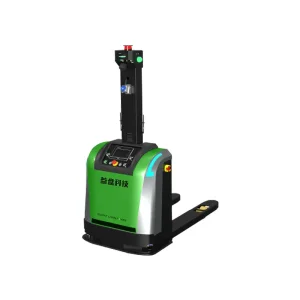
Factory-direct pricing, custom mast configurations, and rapid overseas delivery from Sichuan Supply Chain Power Chain Technology Co., Ltd.
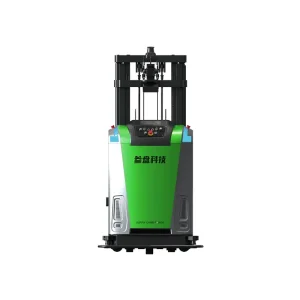
Accelerate Your Automation Upgrade with Factory-Direct Engineering Support
Provide your warehouse CAD drawings, pallet specifications, and throughput targets to receive a comprehensive simulation, multi-vehicle fleet layout, and firm quotation within 24 hours.