
Featured Autonomous Forklifts & Fleet Systems
Precision-engineered autonomous material handling solutions manufactured to rigorous ISO 3691-4 and CE industrial safety benchmarks with reflector-free Laser SLAM navigation.







The Paradigm Shift in Robotics Organizations: Industry 4.0 to Lights-Out Autonomy
Global supply chain volatility, relentless labor shortages, and rising throughput requirements have propelled robotics manufacturing from custom experimental engineering into standardized, mission-critical infrastructure.
In the contemporary industrial landscape, defining the best robotics organizations manufacturers & factory demands a comprehensive evaluation that extends well beyond hardware assembly lines. As multinational logistics hubs, automotive assembly giants, and pharmaceutical cold-chains transition toward lights-out manufacturing, autonomous mobile robots (AMRs) and automated guided vehicles (AGVs) must operate with cognitive adaptability, millimeter-level kinetic accuracy, and zero infrastructure modification.
Historically, industrial material handling relied heavily on legacy magnetic-tape guidepaths, ceiling QR-code matrices, or fixed laser reflectors mounted on structural columns. While these legacy configurations offered functional predictability, they incurred catastrophic retrofit expenditures, extended facility downtime during reconfiguration, and fragile maintenance lifecycles. Leading robotic equipment manufacturers like SCP Technology (Sichuan Supply Chain Power Chain Technology Co., Ltd.) are driving an industry-wide transition toward infrastructure-free natural contour navigation via Laser SLAM (Simultaneous Localization and Mapping). By fusing LiDAR point clouds with high-frequency inertial measurement units (IMUs), wheel odometry, and deep-learning 3D stereoscopic vision, top-tier factories are delivering autonomous vehicles capable of mapping up to 400,000 m² within a single operational coordinate frame.
Furthermore, leading manufacturers are shifting from proprietary closed architectures toward open-source API ecosystems and vendor-neutral fleet interoperability protocols, such as VDA 5050. This empowers enterprise system architects to orchestrate mixed fleets—combining counterbalanced forklifts, narrow-aisle stackers, and sub-chassis stealth lifters—under centralized Manufacturing Execution Systems (MES) and Warehouse Management Systems (WMS).
Global Enterprise Procurement Matrix: Evaluating Robotics OEMs
When procurement executives and chief technology officers audit robotics manufacturers, evaluations focus on six core dimensions that guarantee multi-year operational resilience.
Functional Safety & Redundancy
Robotic handling equipment operating alongside human workforces requires certified dual-channel safety loops complying with ISO 3691-4 and EN ISO 13849-1 (PL-d/Cat.3).
- 360° Safety LiDAR coverage with dynamic field muting
- Physical safety contact edges & fail-safe mechanical brakes
- 3D time-of-flight (ToF) cameras for suspended overhang hazards
Powertrain & Energy Orchestration
Uninterrupted 24/7 factory operations necessitate battery chemistries and recharging infrastructure engineered for continuous shift cycles without degradation.
- Automated high-rate opportunity charging (up to 1C–2C rates)
- Lithium Iron Phosphate (LiFePO4) thermal stability
- Rapid hot-swappable dual-pack battery options under 2 minutes
Software & Fleet Interoperability
Closed ecosystems create vendor lock-in. Premium robotics factories build open computational platforms supporting standard communication APIs.
- RESTful APIs & WebSocket protocols for bi-directional MES/WMS
- Native VDA 5050 compliance for heterogeneous fleet control
- Real-time digital twin visualization & predictive maintenance
Autonomous Fleet Engineering & Kinematic Specifications
Comparative analysis of SCP Technology's autonomous forklift fleet models, sub-chassis robotics, and industrial sensing units.
| Model Architecture | Rated Payload | Kinematic Lift Height | Docking Precision | Max Velocity | Aisle Turn Radius | Navigation Core |
|---|---|---|---|---|---|---|
| SFL-CBD15-ZL Handling Forklift | 1,500 kg (Option 3,000 kg) | 205 mm (Horizontal Transport) | ±5 mm | 2.0 m/s | 1,420 mm | Laser SLAM + Vision Fusion |
| SFL-CDD15 Stacking Forklift | 1,500 kg | Up to 3,000 mm (High Mast) | ±5 mm | 1.5 m/s | 1,580 mm | Natural Contour Laser SLAM |
| SFL-CDD16 Narrow-Road Stacker | 1,600 kg | Up to 4,500 mm | ±5 mm | 1.6 m/s | 1,620 mm | 3D SLAM + AI Pallet Pose |
| SFL-CPD20-Y Counterbalanced | 2,000 kg | Up to 3,500 mm | ±5 mm | 1.8 m/s | 1,980 mm (1,180mm body) | Dual-LiDAR Hybrid SLAM |
| SFL-CPD30-Y Heavy Balanced | 3,000 kg | Up to 4,500 mm | ±5 mm | 1.6 m/s | 2,240 mm | Industrial Safety Laser SLAM |
| AMB-CSW10-BH Stealth Chassis | 1,000 kg | 55 mm (Top Lift Stroke) | ±5 mm | 1.8 m/s | Zero Radius (Differential) | Hybrid Laser SLAM + QR Reflector |
| SCP101 / SCP100 Floor Scales | Custom (100–1,500 kg) | Stationary Terminal | ±0.05% Accuracy | N/A | N/A | Capacitive Touch / MES Sync |
Industry-Specific Intralogistics Solutions
How engineered autonomous vehicle fleets eliminate throughput bottlenecks, mitigate cargo losses, and interface with automated production ecosystems.
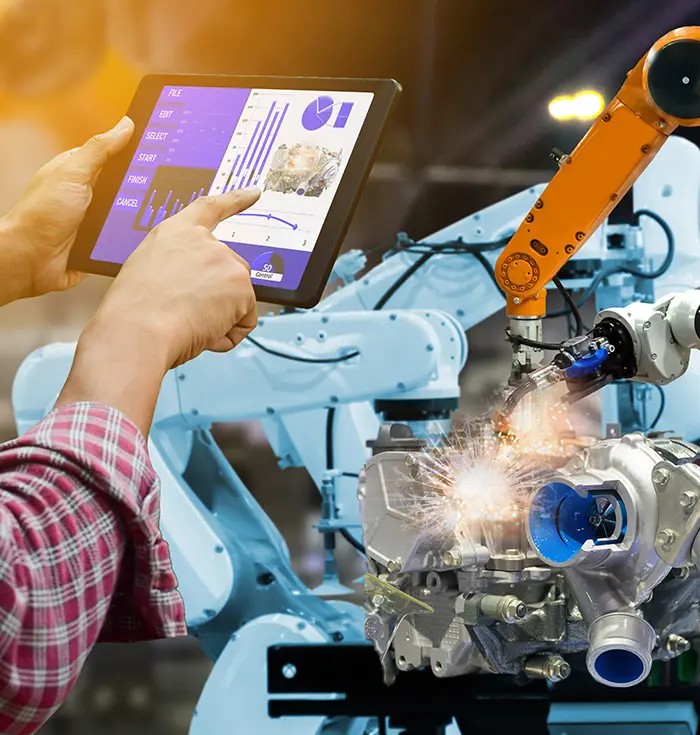
Automotive Stamping, Welding & Line-Side Kitting
Automotive manufacturing demands strict JIT (Just-In-Time) and JIS (Just-In-Sequence) material delivery. Unscheduled downtime on assembly lines can exceed tens of thousands of dollars per minute. SCP Technology solves line-side replenishment bottlenecks by combining the AMB-CSW10-BH mobile robot chassis with SFL-CPD20-Y counterbalanced forklifts.
The AMB-CSW10-BH slides effortlessly under customized parts dollies and raw component racks, executing zero-radius turns within congested press lines. Simultaneously, counterbalanced autonomous forklifts transport finished engine blocks and body stamping dies from the heavy presses directly into high-bay buffering zones. Driven by real-time MES task synchronization via our proprietary SCC Controller, robots dynamic-route around personnel, overhead hoists, and manual tuggers.
High-Bay Racking & High-Throughput 3PL Hubs
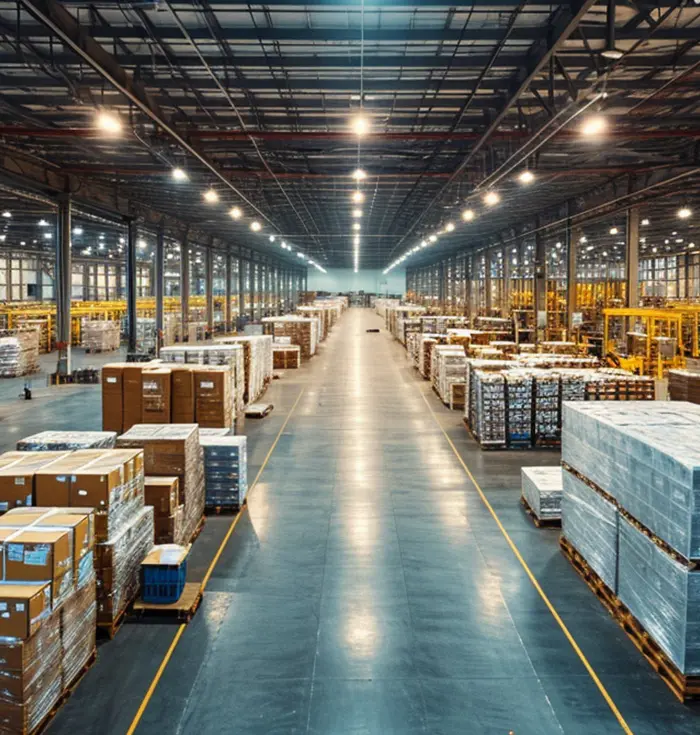
Third-party logistics (3PL) and global fulfillment hubs handle hundreds of distinct SKU dimensions, variable pallet shapes (wooden, plastic, and Euro-spec), and sudden volume spikes. Implementing fixed conveyor infrastructure eliminates operational flexibility, while manual forklift operators represent an escalating operational expense and safety risk.
Deploying the SFL-CDD15 and SFL-CDD16 Laser SLAM stack-height forklifts enables facilities to operate vertical storage up to 4.5 meters in narrow aisles (under 1.9 meters wide). Our integrated 3D stereoscopic vision deep-learning algorithms automatically identify pallet pocket dimensions and skew angles, adjusting fork spacing and insertion trajectory dynamically to eliminate pallet splintering and product spills.
Cold-Chain Warehousing & Automated Food Processing
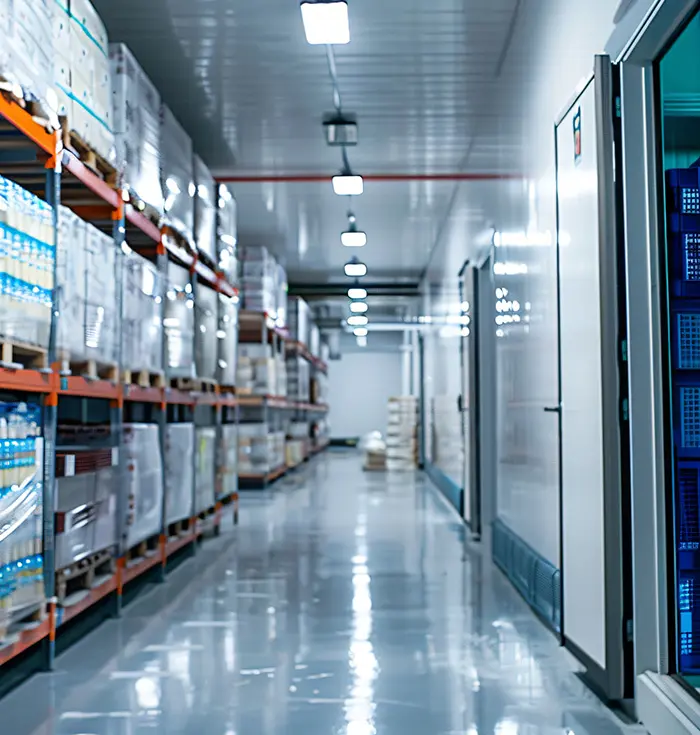
Sub-zero refrigeration environments (-20°C to -30°C) cause rapid human fatigue, elevated safety incident rates, and accelerated battery depletion. Robotic automation in cold food facilities requires specialized low-temperature seals, internal battery heating circuitry, and condensation-resistant sensor casings.
SCP’s cold-chain-configured SFL-CBD15-ZL handling forklifts and SCP101 floor sorting scales create a seamless, hygienic cold-chain pathway. Palletized dairy, frozen meat, and packaged FMCG goods are offloaded at refrigerated cross-docking bays, verified for net weight and volumetric metrics on the SCP101 terminal, and automatically placed in deep-freeze blast cells without requiring human intervention in sub-zero zones.
Omnichannel FMCG & Retail Sorting Distribution
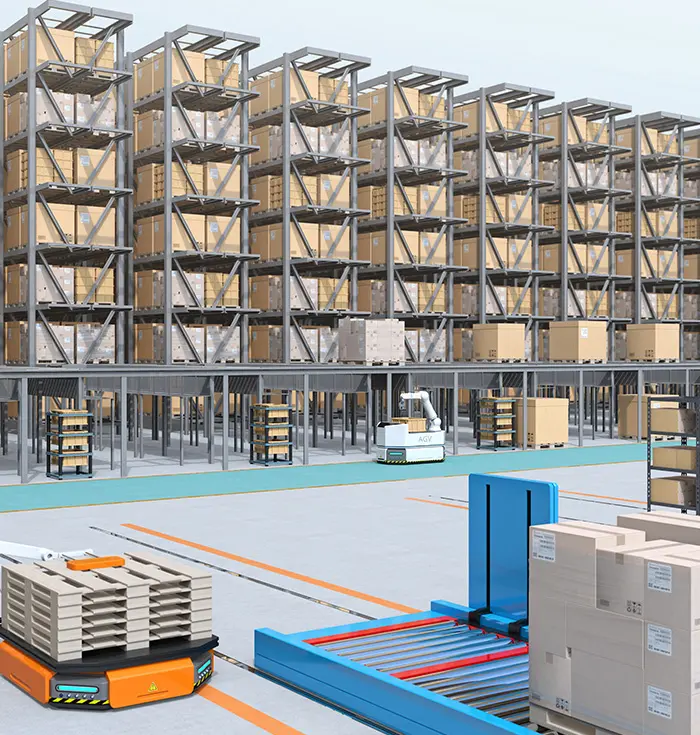
Retail and FMCG distribution centers face fluctuating order profiles—shifting rapidly between full pallet dispatches and broken-case picking for local supermarket outlets. Rigid automation systems struggle with this diversity, leading to dispatch delays and stockouts at the retail level.
Through the combined deployment of the Server X Store fleet orchestrator, compact SFL-300L agile forklifts, and high-speed weighing stations, retailers achieve a fully verified inbound-to-outbound loop. Goods are inducted, scanned, dimensioned, and sorted straight to store-designated staging lanes with ±5 mm docking precision, preventing mis-picks and ensuring full traceability across the distribution network.
Local Support, Global Compliance & Factory Safety Assurance
Deploying autonomous robotics worldwide requires strict adherence to international safety directives, local engineering certifications, and reliable field engineering availability.
Global Safety Certification Standards
Every robot manufactured by SCP Technology complies with the world’s most stringent industrial machinery requirements:
- ISO 3691-4:2023: Specific safety operating mandates for driverless industrial trucks
- CE Machinery Directive 2006/42/EC: Certified functional safety loops
- ANSI/ITSDF B56.5 & NFPA 79: North American automated vehicle compliance
Zero-Retrofit 1-Day Rapid Deployment
Traditional AGVs require weeks or months of floor excavation, magnetic track burial, and reflector installation. SCP eliminates these costs:
- No magnetic tape, floor reflectors, or ceiling QR codes required
- CAD/BIM facility layout ingestion to build active vector navigational maps
- Rapid on-site mapping and operational validation within 24 hours
30+ Countries Worldwide Service Network
A reliable robotics factory must support overseas installations through responsive technical backing, spare parts, and remote diagnostics:
- Tier-3 remote telematics via encrypted cellular IoT and edge connectivity
- Regional parts hubs ensuring component dispatch within 48 hours
- Over 300 granted patents & utility copyrights protecting long-term enterprise software IP
Autonomous Material Handling Roadmap: 2025 to 2030
How edge intelligence, neural radiance fields, and agentic logistics are transforming modern robotics manufacturing.
Edge AI Vision & NeRF SLAM
Moving beyond sparse 2D LiDAR slices into dense 3D semantic understanding. Neural Radiance Fields (NeRF) and spatial voxel mapping allow robots to navigate highly dynamic logistics hubs with dense pedestrian and vehicle traffic, recognizing complex non-standard pallets even in variable lighting conditions.
Swarm Autonomy & 5G-Advanced V2X
Eliminating single-point master dispatch server limitations through decentralized peer-to-peer collision avoidance. Vehicles communicate via 5G ultra-reliable low-latency links (URLLC), negotiating intersection priority and dynamic lane merging in milliseconds.
Agentic Multi-Ecosystem Orchestration
Unifying autonomous mobile robots with robotic arms, automated vertical carousels (ASRS), and auto-packing lines via large action models (LAMs). The robotics factory of tomorrow operates as an interconnected ecosystem, dynamically self-balancing across unpredictable production schedules.
Industry News & Supply Chain Insights
Examining how digital-intelligence supply chains, the SCC controller ecosystem, and automated robotics hubs are reshaping FMCG and industrial manufacturing.
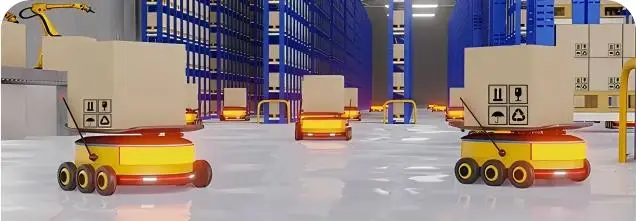
Grassroots Knowledge Partners' Night, Watched by 1.1M+ Viewers, Shapes a New Future for Consumer Goods
Held in Xinjin, Chengdu, the 6th Grassroots Knowledge Partners' Night united hundreds of industry executives and over 1.1 million live-stream viewers. Industry leaders explored how intelligent automation, rapid-deployment Laser SLAM forklifts, and factory-level supply chain digital intelligence solve systemic inventory bottlenecks across fast-moving consumer goods ecosystems.
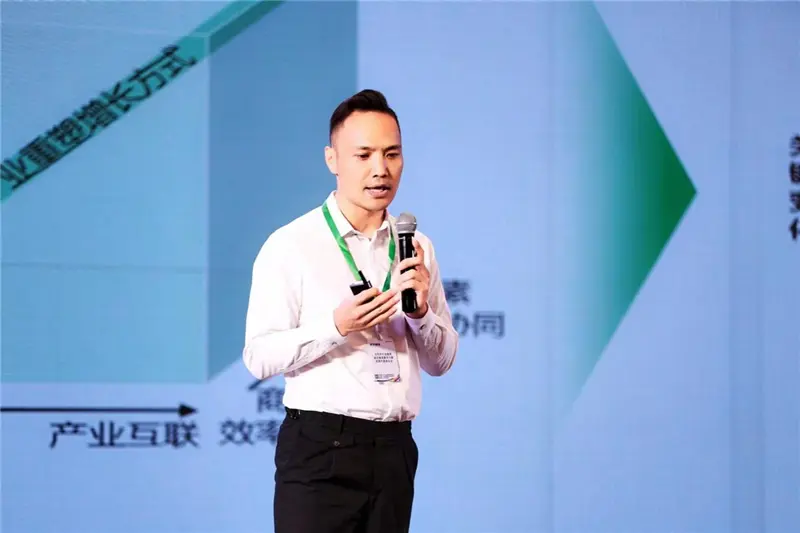
Innovation · Future: Supply Chain Digital Intelligence Drives New Growth for FMCG Enterprises
At the Intelligent Logistics Technology Innovation Summit, automation specialists and warehouse system architects detailed how data-driven autonomous material handling platforms bridge the gap between high-level ERP software and daily plant floor reality, demonstrating documented ROI periods under 18 months.
Questions Global Enterprise Buyers Ask Before Automating
Clear, data-backed answers based on practical field deployments across thousands of automated facilities worldwide.
What navigation technology do SCP autonomous forklifts use, and does it require facility retrofitting?
How do SCP autonomous vehicles integrate into our existing corporate WMS, MES, or ERP platforms?
What is the real-world timeline for commissioning an autonomous forklift fleet on-site?
What payback period (ROI) and total cost of ownership (TCO) benchmarks can our financial team expect?
Which load capacities, lift elevations, and chassis styles are supported across the factory range?
- Sub-Chassis AMRs: 1,000 kg payload (AMB-CSW10-BH) with top-lifting mechanism for shelf and cart transport.
- Horizontal Pallet Trucks: 1,500 kg to 3,000 kg capacities (SFL-CBD15-ZL, SFL-CBD20, SFL-CBD30) for fast ground transfers.
- Stacking Forklifts: 1,500 kg to 1,600 kg capacities (SFL-CDD15, SFL-CDD16) with vertical lift masts reaching up to 4.5 meters in narrow aisles.
- Counterbalanced Forklifts: 2,000 kg to 3,000 kg capacities (SFL-CPD20-Y, SFL-CPD30-Y) with narrow 1,180 mm chassis widths designed for open-dock truck unloading and heavy manufacturing line supply.
- Weighing & Sorting Infrastructure: Integrated SCP100/SCP101 floor sorting scales with capacitive touch interfaces.
How are dynamic safety and obstacle avoidance managed in facilities with active foot traffic?
How are fleet power cycles and battery charging managed over multi-shift schedules?
Which industrial verticals are actively deploying SCP Technology systems?
High-Capacity Smart Forklifts & Mobile Chassis Platforms
Explore additional specialized autonomous configurations, narrow-corridor stackers, heavy-load transports, and flexible robotics bases direct from our Chengdu factory.



Request Factory Direct Engineering Specifications & Fleet Simulation
Collaborate directly with SCP Technology’s systems architects. We analyze your CAD floor plans, pallet types, and throughput targets to generate comprehensive ROI models and simulation blueprints before physical deployment.