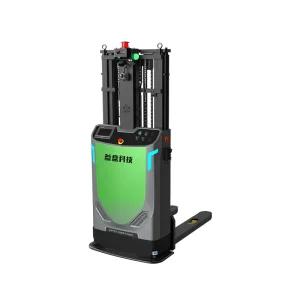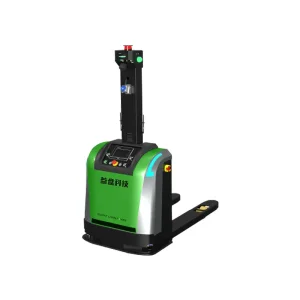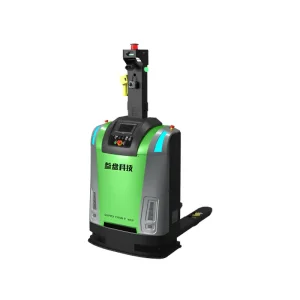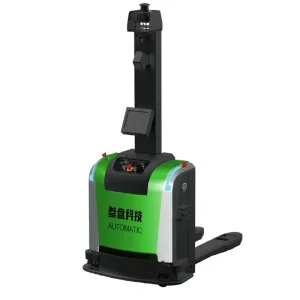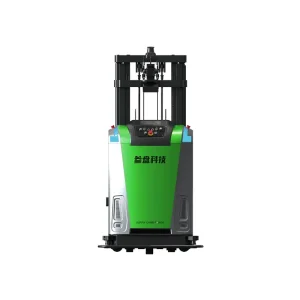
Featured Industrial Robot Systems
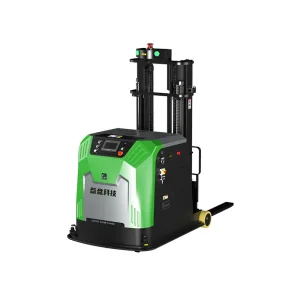
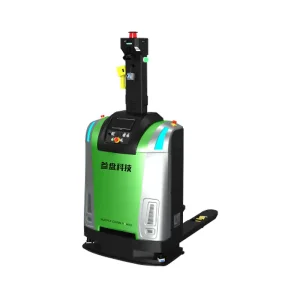
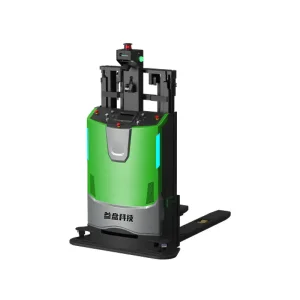
Directly manufactured, high-performance Laser SLAM mobile robotics, autonomous stackers, and counterbalanced vehicles designed for 24/7 continuous warehouse operations.
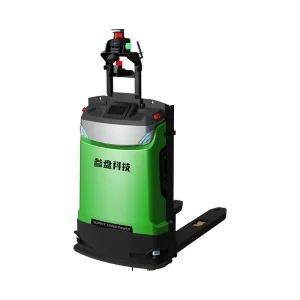
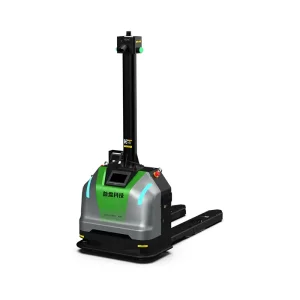
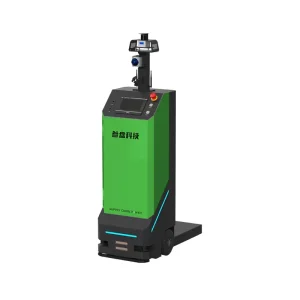

Global Procurement Shifts in Autonomous Mobile Robotics (AMR)
How Fortune 500 manufacturers and tier-one 3PL providers are addressing systemic structural labor deficits, operational throughput limits, and ESG directives through China's robotics production ecosystem.
Escalating Labor Deficits
Global fulfillment hubs face a 35% turnover rate across certified forklift operators. AMR fleets decouple warehouse scalability from local labor availability, guaranteeing deterministic 24/7 pallet transfer cycles.
Sub-Centimeter Execution
Traditional infrastructure relies on human precision that degrades over eight-hour shifts. Dual-laser SLAM configurations maintain precise positioning of ±5 mm, virtually eliminating product and racking collision costs.
Agile Facility Retrofits
Legacy AGVs require intrusive embedded magnetic wires, floor tape, or reflective markers. Modern Chinese AMRs utilize natural environmental contours, delivering total facility mapping within 24 to 48 hours without operational shutdowns.
Turnkey Automation Matrix Across Enterprise Sectors
Customizing vehicle architecture, mast design, and middleware protocols for challenging industrial work cells.
Automotive & Heavy Assembly
Seamless point-to-point delivery of heavy stamping dies, engine blocks, and sub-assemblies. AMRs interface natively via OPC-UA to plant-floor MES, pacing replenishment loops to prevent takt-time starvation.
Cold-Chain Distribution (-25°C)
Engineered drive trains with internal thermal jackets, non-condensing optical enclosures, and specialized lithium battery chemistries designed to withstand rapid transit between sub-zero freezers and ambient transfer docks.
Semiconductor & Cleanroom
ISO Class 4/5 cleanroom compliant chassis featuring zero particulate shedding, anti-static poly wheels, and closed-loop filtration. Precision transport ensures high-value silicon wafers and lithography components remain vibration-free.
Fast-Moving Consumer Goods (FMCG)
High-speed dynamic dispatching for multi-SKU cross-docking centers. Incorporates intelligent vision algorithms to identify mixed pallet dimensions, unaligned fork pockets, and damaged transport pallets dynamically.
Technical Architecture: Laser SLAM Navigation Matrix
System breakdown comparing natural-feature Laser SLAM robotics against legacy automated guided vehicles.
| Evaluation Parameter | SCP Natural Laser SLAM (Industrial) | Legacy Optical / QR Code AGV | Magnetic Track Systems |
|---|---|---|---|
| Site Modification | Zero civil engineering; utilizes natural spatial contours | Installation of thousands of physical matrix QR floor tags | Deep-cutting floor slots for continuous magnetic tape |
| Path Flexibility | Dynamic real-time rerouting around transient blockages | Strict nodal navigation; full halt on blocked pathways | Locked single-line trajectory without deviation limits |
| Docking Precision | ±5 mm via secondary 3D vision alignment algorithms | ±10 mm to ±15 mm depending on visual tag hygiene | ±10 mm to ±20 mm subject to wear and tear of tracks |
| Single Map Scaling | Up to 400,000 m² continuous single-layer spatial coverage | Constrained by QR code grid density (< 50,000 m²) | Linear constrained routes; highly cost-prohibitive |
| Deployment Speed | 1 to 3 business days for multi-point production lines | 3 to 6 weeks for physical code surveying and floor gluing | Months for civil cutting, laying, and epoxy resealing |
Technological Trajectory: Next 3 to 5 Years
Anticipating hardware, fleet compute, and operational orchestrations across the next operational cycle.
Phase I: Semantic AI Vision Integration
Evolution from static geometric obstacle recognition to deep-learning scene segmentation. AMRs dynamically classify obstacles as transient personnel, cross-traffic forklifts, pallet debris, or misplaced freight, tailoring avoidance speed models to each specific category.
Phase II: Heterogeneous Fleet Orchestration
Standardization under VDA 5050 interoperability layers. Factory facilities will seamlessly direct top-lifting AMRs, high-reach narrow-aisle stackers, sorting tables, and third-party robotic arms under a single unified spatial routing algorithm without traffic conflicts.
Phase III: Cloud-Native Control Towers
Predictive health analysis driven by edge sensor analytics. Drive motors, lift cylinders, and optical transceivers self-report mechanical stress patterns, scheduling autonomous docking at charging and maintenance bays prior to line failure events.
Global Compliance & Field Support Protocols
Procuring autonomous capital equipment internationally demands absolute legal, safety, and logistical transparency.
Functional Safety Certification
Vehicles feature category 4, Performance Level d (PL-d) dual-channel safety loops certified under ISO 3691-4, EN 1525, and ANSI/ITSDF B56.5. Physical dual-emergency estops, redundant LIDAR fields, and safety contact edges ensure safe human-robot coexistence.
Cybersecurity & Network Integrity
Hardened Linux runtime kernels with air-gapped deployment profiles. Vehicles support enterprise-grade WPA3-Enterprise 802.1X wireless authentication, TLS 1.3 encrypted REST API endpoints, and isolated operational VLAN segregation without forced external cloud dependence.
Lifecycle Spares & Local Integrators
Partnered with certified automation distributors across North America, the European Union, and Southeast Asia. Modular replacement designs allow line-side technicians to hot-swap optical sensors, circuit control boards, and drive assemblies within 30 minutes.
Industrial Robotics & Factory Sourcing FAQ
Answers to common structural, technical, and operational questions from plant managers and supply chain directors.
What makes Natural Laser SLAM fundamentally superior to QR-code or Reflector setups?
How do SCP mobile robots communicate with proprietary WMS/MES platforms?
What safety protocols protect personnel working alongside autonomous equipment?
What floor conditions and tolerances are required for continuous operation?
Autonomous Heavy Transport & High-Reach Stacking
Browse our extended product portfolio featuring high-capacity lithium counterbalanced models, deep racking stackers, and multi-sensor navigation setups.