
1.6T SLAM

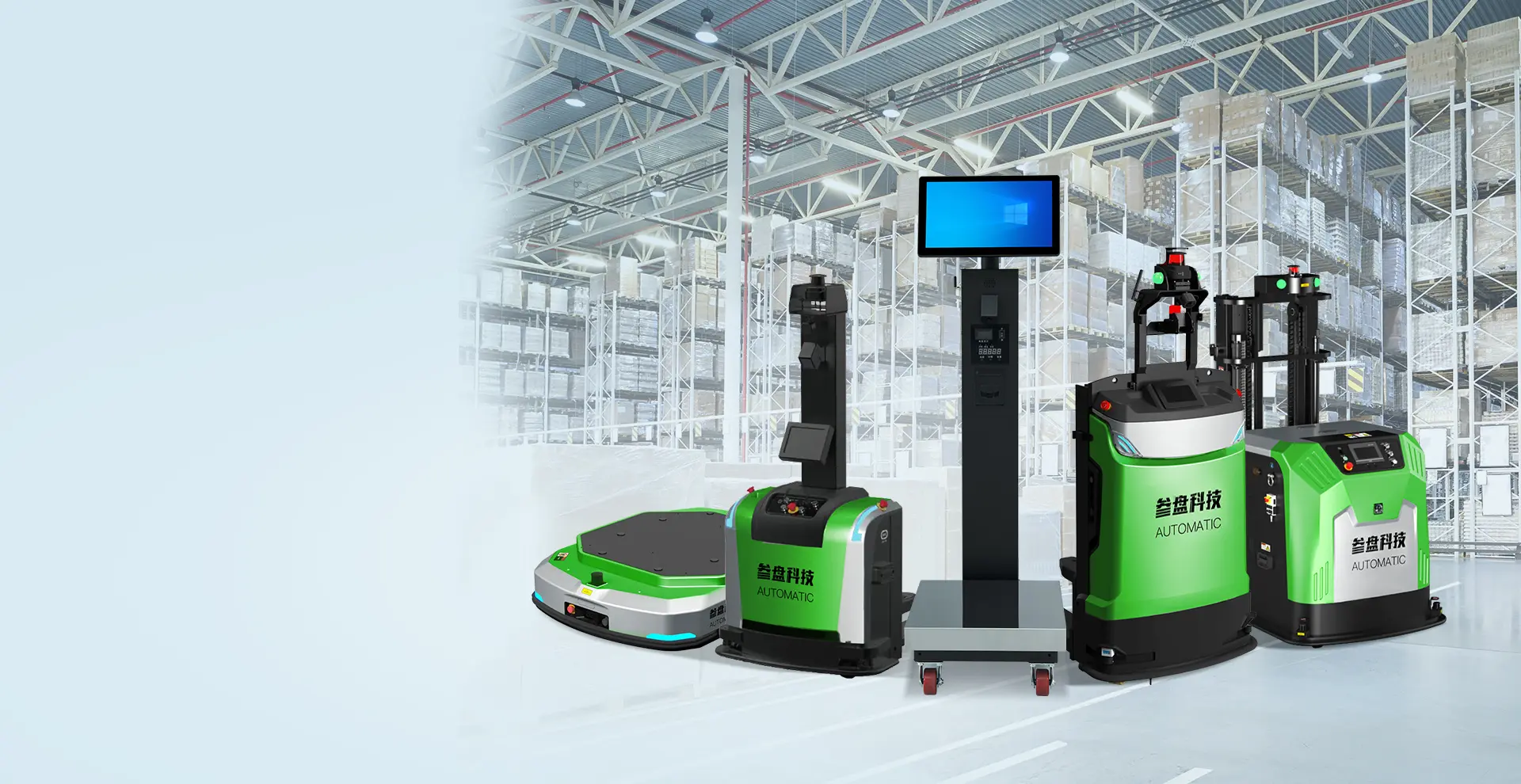
Engineered for high-throughput pallet conveyance, precision floor stacking, and automated truck dock-to-line buffer handling with millimeter-level laser navigation.





The transition from manual material transport to intelligent autonomous mobile robotics (AMR) is no longer a speculative upgrade—it is a foundational imperative for supply chain resilience.
Traditional Automated Guided Vehicles (AGVs) relied on fixed magnetic tapes, embedded floor wires, or retro-reflective laser targets. Contemporary facilities demand agile Laser SLAM (Simultaneous Localization and Mapping) that utilizes ambient environmental contours. This eliminates millions in civil floor engineering costs, reduces facility downtime during installation, and enables 1-day dynamic remapping.
Enterprise procurement teams actively reject proprietary supplier lock-in. The emergence of the standardized VDA 5050 communication interface allows mixed fleets—combining autonomous stackers, counterbalance tuggers, and low-profile chassis robots—to communicate over MQTT/JSON with a single vendor-neutral Fleet Management System (FMS).
Modern warehouse automation robots leverage deep learning inference engines to detect pallet apertures, damaged skids, and load center variations in 3D point cloud space. With ±5 mm target docking precision, vehicles adapt to irregular pallet placement without halting production or dropping fragile SKUs.
Enterprise procurement leaders evaluate automation suppliers through the lens of comprehensive lifecycle costs rather than initial hardware stickers. SCP Technology's integrated delivery framework eliminates secondary consultant margins, guarantees software protocol compatibility, and compresses the typical multi-month deployment timeline into accelerated single-week turnarounds.
| Evaluation Parameter | Legacy Manual Forklift Fleets | Conventional Magnetic/QR AGVs | SCP Laser SLAM AMR Ecosystem |
|---|---|---|---|
| Civil Floor Modification | Zero modifications needed | Extensive cutting, magnetic striping, QR matrixes | Zero Retrofit (Reflector-Free SLAM) |
| Docking & Handling Precision | Varies by driver fatigue (±50 mm) | ±10 mm to ±25 mm | ±5 mm Industrial Grade |
| Commissioning Cycle | Immediate asset lease | 8 to 16 weeks infrastructure setup | 1-Day Rapid Deployment Available |
| Operating Shift Versatility | Limited by driver shifts, overtime wages | 24/7 with wire path bottlenecks | 24/7 Continuous (Auto-Charge & 2-Min Swap) |
| Safety Classifications | Human error liability risk | Basic bumper sensors, single-plane safety | ISO 3691-4 / CE Dual LiDAR 360° |
From cleanroom semiconductor fabrication to heavy automotive assembly and temperature-controlled logistics, discover purpose-engineered robotic solutions.
Synchronized material movement connecting inbound staging areas to Just-In-Time (JIT) line-side buffers. AMR chassis slide under kitting carts, while counterbalanced SFL series units lift sub-assemblies directly onto high-precision assembly jigs.
High-turnover distribution centers utilizing floor sorting scales (SCP100/101) alongside autonomous pallet trucks. Seamless integration with WMS platforms eliminates cross-dock bottlenecks and supports multi-layer pallet stacking up to 3 meters.
Harsh sub-zero warehouse environments create severe safety and turnover challenges for human operators. SCP cold-grade autonomous forklifts operate continuously in chilled and deep-freeze logistics bays without thermal battery dropoff.
Unpredictable seasonal surges require agile capacity scaling. The combination of low-profile stealth AMRs and narrow-body stackers maximizes cubic storage density, narrow aisle traversal (down to 1180 mm), and dynamic zone rerouting.
A truly reliable warehouse robotics supplier must deliver full-stack vertical integration, ensuring no compatibility friction between hardware drives and business software.
The physical brain installed on every vehicle. Featuring automotive-grade microchips, integrated CAN bus networks, and real-time spatial odometry fusion. It handles sub-millisecond motion kinematics, dual safety laser interlocks, and emergency dead-stop triggers.
An industrial multi-agent fleet dispatch system capable of coordinating up to 200+ mobile units on a single digital map. Dynamic time-space graph algorithms resolve traffic deadlocks, allocate automated charging tasks, and maintain optimum route efficiencies.
The executive oversight dashboard unifying ERP, MES, and WMS data streams. Offers global visibility into fleet telemetry, cycle times per hour (CPH), battery health trends, and predictive maintenance alerts to prevent unplanned factory line stoppages.
Deploying driverless machinery within human-occupied logistics facilities requires rigorous safety engineering. SCP autonomous vehicles are compliant with worldwide functional safety and cybersecurity directives, ensuring zero workplace injuries and robust network integrity.
A transparent look at the emerging hardware evolutions, generative AI foundations, and connectivity paradigms being integrated into SCP's research and development pipelines.
Migrating from conventional industrial Wi-Fi roaming—which frequently suffers from handoff drops—to Private 5G Ultra-Reliable Low-Latency Communication (URLLC). Enables microsecond fleet synchronization, deterministic edge control, and massive sensory data uploading to localized neural compute clusters.
Moving beyond pre-programmed CAD map limitations. Next-generation AMRs incorporate multimodal Vision-Language-Action (VLA) foundation models, allowing automated vehicles to comprehend physical warehouse environments contextually, infer operator hand gestures, and navigate unstructured debris safely.
Energy efficiency underpins 24/7 continuous operation. SCP is introducing next-gen solid-state lithium chemistry, delivering 4,000+ lifecycle charge cycles with zero fire risk, ultra-fast 2-hour full recharges, and automated 2-minute robotic battery-swap docks.
Complete your facility transformation with high-reach vertical automated stackers, low-profile stealth chassis platforms, and high-capacity industrial lifters.




Direct answers from our robotics application engineering team regarding navigation precision, API architecture, battery lifecycles, and deployment parameters.
Our Laser SLAM navigation fuses LiDAR point-cloud geometry with wheel odometry, internal inertial measurement units (IMUs), and 3D visual aperture recognition. By correlating local feature maps with stored CAD reference coordinates in real-time at 50 Hz, the vehicle achieves sub-centimeter repeatable docking accuracy without any physical modifications to your facility floor or walls.
For standardized pallet transport between existing production lines and buffer drop points, our team supports 1-day rapid deployment. Because our systems require zero civil floor engineering or reflector mounting, our engineers simply map the facility via a manual laser scan, configure restricted safety corridors in Server X Store software, and initiate live test runs immediately.
We deliver an open RESTful API and WebSocket interface compliant with VDA 5050 protocols. The SCP SCC controller and Server X Store fleet software bridge directly with SAP, Manhattan Associates, Blue Yonder, Oracle NetSuite, and custom in-house MES systems, translating pick/drop orders into coordinated robotic dispatch actions automatically.
Our forklifts utilize industrial-grade Lithium Iron Phosphate (LiFePO4) battery packs designed for 3,500+ deep cycles. Vehicles feature automated opportunity charging during idle dispatch gaps (full fast-charge within 2 hours), as well as a 2-minute manual quick-swap mechanism for 24/7 non-stop industrial operations.
Yes. Every vehicle adheres strictly to ISO 3691-4 international safety standards. With dual certified safety laser scanners offering 360° protection, 3D visual obstacle avoidance cameras, visual warning projection lights, and sound alarms, the vehicle detects pedestrians, obstacles, and protruding objects, smoothly decelerating or re-routing without human intervention.
Our intelligent visual perception system identifies standard Euro pallets (1200x800mm), US GMA pallets (48x40 inch), plastic skids, custom metal roll containers, and wire mesh bins. Dynamic fork adjustment accommodates varying fork pocket dimensions, while tilt sensors confirm load stability prior to high-speed horizontal traversal.
Connect directly with our senior intralogistics robotics application engineers for a comprehensive site CAD analysis, throughput simulation, and guaranteed sub-18 month ROI proposal.