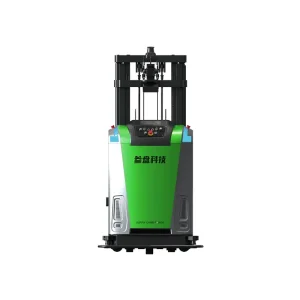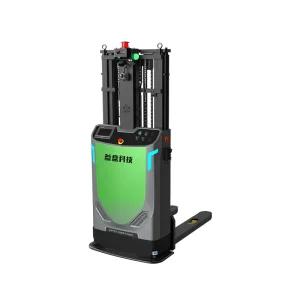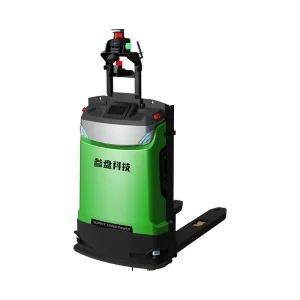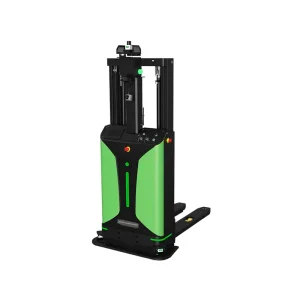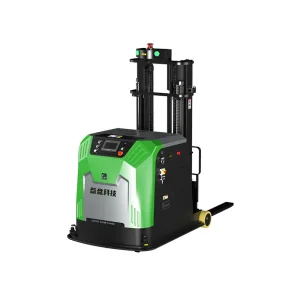
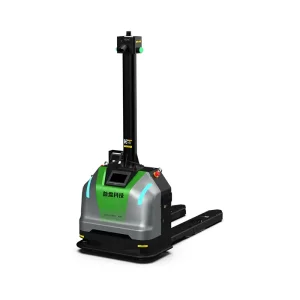
High-Payload Laser SLAM Pallet Trucks for Saint-Louis Terminals
Engineered for high-cadence intermodal transfers, cross-dock loading, and cold-chain staging with millimeter-level laser positioning.
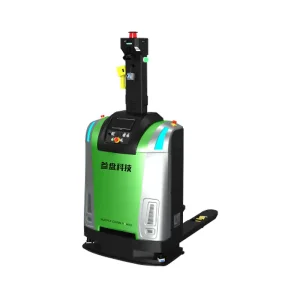
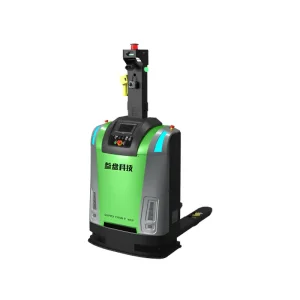
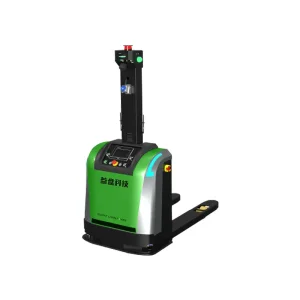
Saint-Louis: The Intermodal Crossroads of American Freight
Analyzing intralogistics throughput, labor market dynamics, and facility modernizations across Greater St. Louis, the Metro East corridor, and the Mississippi River inland port ecosystem.
The Local Pallet Handling Reality: High Velocities & Shifts
The Greater St. Louis metropolitan logistics area, spanning eastern Missouri and southwestern Illinois (Metro East), is experiencing an unprecedented evolution in pallet velocity. Centered around major arteries including Interstate 70, Interstate 55, Interstate 64, and Interstate 44, warehouse operators handle millions of pallet units monthly. Traditional manual electric pallet jacks face acute headwinds: surging turnover in lift-truck certified personnel, repetitive motion injuries, and escalating per-hour labor rates.
Consequently, tier-1 3PLs, consumer goods conglomerates, cold-chain distributors, and manufacturing assembly plants in Earth City, Hazelwood, Fenton, and Pontoon Beach are transitioning aggressively from conventional lead-acid manual pallet jacks to smart autonomous pallet trucks (Laser SLAM AGVs and AMRs). Sourcing the right pallet truck supplier serving Saint-Louis demands a holistic understanding of this regional intermodal environment.
- High density operations at Gateway Commerce Center and Lakeview Commerce Center.
- Aggressive 24/7 round-the-clock schedules demanding 2-minute battery swaps or opportunistic fast charging.
- Stringent OSHA standard enforcement targeting dock and pedestrian cross-traffic collisions.
Macro Supply Chain Sourcing: OEM Quality & Direct Support
Saint-Louis enterprises can no longer rely on localized dealerships with backordered spare parts, opaque middleman markups, or rigid proprietary software ecosystems. Modern procurement teams evaluate pallet truck suppliers based on total lifecycle agility, open API architectures, and zero-retrofit operational compatibility.
By partnering with world-class manufacturers who provide direct access to Laser SLAM software controllers (SCC), direct engineering fleet design, and turnkey hardware integration, Saint-Louis facilities eliminate vendor lock-in. Whether you need standard 1.5-ton powered electric pallet trucks for retail receiving or heavy-duty 3.0-ton autonomous trucks synchronized with high-bay AS/RS systems, industrial suppliers must guarantee rapid parts availability, local technical commissioning, and transparent ROI metrics.
- Zero floor refurbishment: Natural feature navigation bypassing expensive floor magnetic tapes.
- Open API connectivity to SAP, Blue Yonder, Manhattan Associates, and Oracle WMS.
- Complete compliance with ANSI/ITSDF B56.5 and ISO 3691-4 industrial vehicle standards.
Macro Dynamics Driving Autonomous & Electric Pallet Truck Sourcing
A rigorous examination of technological shifts: the shift from manual walkies to hybrid AMRs, LiFePO4 battery chemistry, and AI computer vision.
1. Paradigm Shift: From Fixed AGVs to Laser SLAM AMRs
Traditional Automated Guided Vehicles (AGVs) relied on inductive wires cut into concrete floors, magnetic tape, or thousands of reflective targets positioned on rack posts. If warehouse layouts changed, remodeling costs ran into tens of thousands of dollars. Today, Natural Feature Laser SLAM (Simultaneous Localization and Mapping) enables pallet trucks to map up to 400,000 m² in real-time. By utilizing LiDAR point clouds combined with onboard inertial measurement units (IMU), vehicles calculate dynamic trajectories on the fly, dynamically dodging obstacles and humans without halting throughput.
2. Electrochemical Superiority: Lithium Iron Phosphate (LFP)
The era of heavy, high-maintenance lead-acid traction batteries has ended. Leading pallet truck suppliers now equip vehicles with high-density Lithium Iron Phosphate (LiFePO4) power packs. LFP chemistry offers over 3,500 full charge cycles at 80% DoD, zero off-gassing during charging (eliminating dedicated battery rooms), and opportunistic charging capabilities. Pallet trucks can accept high-amperage top-offs during 15-minute operator breaks, delivering uninterrupted 24/7 continuous duty cycles without battery degradation.
3. 3D AI Perception & Pallet Pose Estimation
A classic failure point in automated pallet handling is pallet misalignment. When wood pallets arrive warped, damaged, or angled askew inside trailers, legacy forks crash into cross-stringers. Advanced pallet trucks feature dual-aperture 3D depth cameras running edge neural networks. The system detects pallet entry pockets in 3D coordinate space, dynamically adjusting fork height, approach yaw, and lateral displacement to achieve flawless insertion even with ±15° angular misplacements.
| Evaluation Parameter | Legacy Manual Pallet Jacks | Magnetic/Reflector AGVs | Next-Gen Laser SLAM Smart Pallet Trucks |
|---|---|---|---|
| Infrastructure Dependency | None (Human manual operator) | High (Buried wires, floor magnetic tape, LiDAR targets) | Zero (Reflector-free natural environment mapping) |
| Operating Labor Cost | High ($45k - $60k/year per operator per shift) | Low running cost, but high maintenance programming | Autonomous lights-out operation; multi-shift ROI < 18 mos |
| Positioning & Docking Precision | Subject to human error and fatigue | ±15 mm to ±25 mm depending on floor wear | ±5 mm repeat positioning with dynamic docking |
| Safety System Standard | Manual horn, dependent on operator vigilance | Basic bumper bar and single-zone safety LiDAR | 360° dual safety LiDAR, 3D obstacle avoidance, ISO 3691-4 |
| WMS / ERP Integration | Handheld barcode scan RF guns (delayed) | Custom proprietary PLC protocols | Direct RESTful API, MQTT, WebSockets to MES/WMS/WCS |
High-Yield Industrial Applications Across the St. Louis Bi-State Area
Targeted solutions engineered for the specific material handling challenges of the Midwest manufacturing and warehousing sector.
1. High-Cadence Cross-Docking in Earth City & Hazelwood
Earth City and Hazelwood represent two of Missouri’s densest cross-dock distribution hubs. Freight arriving via 53-foot dry vans requires rapid unloading, pallet consolidation, weighing, and transfer across broad warehouse floors to outbound bays. SFL-CBD20 and SFL-CBD30 smart pallet trucks operate continuously between dock plates and buffer racks, removing fork-truck traffic bottlenecks and reducing dockside pallet staging errors by 99%.
- Dynamic integration with dock levelers and automated roll-up overhead doors.
- Instant floor buffer clearing during peak midnight and dawn sorting shifts.
- Elimination of forklift collision risks in congested staging lanes.
2. Cold Storage & Food Processing Facilities in North City & Illinois Corridor
Greater Saint-Louis has deep historical roots in food, beverage, and brewing logistics. From cold-storage consolidation in Sauget to dairy, meat packaging, and temperature-controlled beverage operations along the riverfront, manual pallet handling in sub-zero environments leads to high turnover and frost-related mechanical wear. Specialized low-temperature Laser SLAM pallet trucks feature IP-rated electronic enclosures, heated sensor lenses, and specialized non-marking polyurethane drive wheels.
- Operating temperature resilience down to -25°C (-13°F).
- Hermetically sealed electronics preventing condensation during zone transitions.
- Hygienic easy-clean chassis avoiding microbial entrapment in washdown corridors.
3. Automotive Sub-Assembly & Heavy Industrial Parts Feeding
With major automotive assembly, tier-1 suppliers, aerospace fabrication, and metal stamping operations across the St. Louis metropolitan zone (including Wentzville and surrounding corridors), lineside replenishment cannot tolerate delays. The AMB-CSW10-BH mobile robot chassis and heavy counterbalanced autonomous units deliver customized stillages, engine crates, and wire baskets directly to active workstation cells with ±5 mm precision.
- Tight line-side delivery without requiring broad turning clearways.
- Automated replenishment calls triggered directly by PLC or MES button triggers.
- Elimination of tow-motor accidents in dense assembly plant walkways.
4. Retail E-Commerce Fulfillment & High-Density Pallet Stacking
Major online retailers and wholesale grocers operating multi-tier distribution campuses in Edwardsville and Pontoon Beach require seamless movement from intake staging directly into pallet racking. Utilizing the SFL-CDD series of stack-height smart forklifts, facilities automate horizontal transport and vertical put-away up to 3 meters, bridging the gap between flat pallet trucks and heavy counterbalance equipment.
- Dynamic aisle negotiation down to 1.8-meter narrow operating corridors.
- Multi-layer empty pallet de-stacking and consolidation for rapid staging.
- Direct barcode scanning and RFID validation integrated into lift cycles.
Technology Roadmap: The Future of Autonomous Pallet Trucks (2025–2030)
A technical forecast outlining the migration paths from standalone automated trucks to autonomous swarm intelligence, edge-computed perception, and green energy harvesting.
Phase 1: Multi-Agent Swarm Dispatching (Current Standard)
Modern pallet fleets deployed across Saint-Louis warehouses run on multi-agent scheduling engines like the Server X Store and SCC Fleet Controller. Instead of point-to-point hardcoded tracks, hundreds of autonomous pallet trucks calculate non-conflicting global paths using advanced A* and time-elastic-band algorithms. Deadlocks in narrow intersections are completely eradicated through live priority reservations.
- Simultaneous orchestration of over 300 vehicles on a unified virtual map.
- Traffic density heat-mapping to dynamically redirect secondary travel routes.
- Automatic opportunistic dispatching to inductive charging stations.
Phase 2: Edge V2X Communication & 5G Private Networks
By 2026, leading suppliers are deploying ultra-reliable low-latency 5G private networking across distribution centers. Pallet trucks communicate directly with automated stretch-wrappers, high-speed roll-up doors, dock levelers, and inventory drones via Vehicle-to-Everything (V2X) protocols. Latency drops below 5 milliseconds, enabling lightning-fast reaction times and fluid vehicle coordination.
- Zero blind spots at blind corner intersections via infrastructure sensor feeds.
- Direct trailer floor structural vibration monitoring before truck entry.
- Real-time telemetry streaming for predictive component lifecycle analysis.
Phase 3: Embodied AI & Zero-Shot Environmental Adaptation
The next frontier is the integration of multimodal foundation models directly onto onboard compute modules. Pallet trucks will no longer merely follow programmed coordinate boundaries; they will interpret natural human gestures, read damaged shipping labels, adapt to spilled debris or floor obstacles without stopping, and negotiate complex loading docks with human-like contextual reasoning.
- Zero-shot pallet pocket recognition across damaged, non-standard skids.
- Autonomous human gesture recognition for collaborative order picking.
- Continuous operational self-learning improving cycle times by 12% yearly.
Turnkey Deployment Methodology for Saint-Louis Facilities
Frequently Asked Questions: Pallet Truck Sourcing in Saint-Louis
Direct technical and commercial answers for operations managers, plant directors, and supply chain procurement executives.
Why choose Laser SLAM autonomous pallet trucks over traditional manual walkies in Saint-Louis?
Does our facility require floor renovations, magnetic tracks, or ceiling targets?
How do these pallet trucks handle standard American GMA 48x40 wood pallets?
How does the vehicle fleet interface with our WMS/ERP system?
What are the battery specifications, charging cycles, and multi-shift capabilities?
What safety certifications do these pallet trucks comply with for US facilities?
High-Reach Autonomous Stackers, Counterbalanced Forklifts & AMR Chassis
Engineered for multi-level racking, heavy pallet transport, and flexible mobile chassis integration across Mid-America facilities.