
High-Precision Electric & Autonomous Stackers for Dudelange Facilities
Engineered for high-throughput cross-docking, tight Eurohub rack aisles, and zero-emission operations with ±5 mm docking precision.
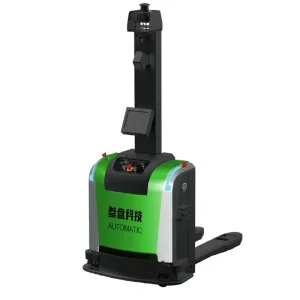
Dudelange High-Speed Laser SLAM Portable Intelligent Forklift
- Navigation: Natural Contour SLAM
- Payload Rating: 1,000 kg – 1,400 kg
- Aisle Clearance: Ultra-Narrow (1.8 m)
- Deployment Time: < 24 Hours
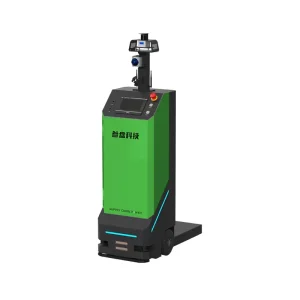
Dudelange Intermodal Single Wishbone Smart Forklift SFL-300L
- Design Architecture: Single Wishbone Mast
- Turning Radius: 600 mm Radial Arch
- Payload Capacity: 300 kg Light Carrier
- Safety System: 360° LiDAR Zone Scanners
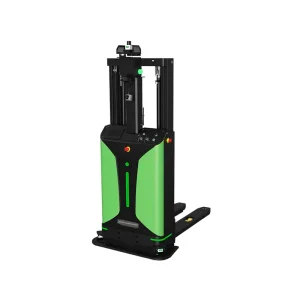
Dudelange Laser SLAM Small Stack-Height Smart Forklift SFL-CDD14 & CDD14-CE
- European Compliance: EN ISO 3691-4 / CE Marked
- Lift Height: Up to 2,500 mm Elevation
- Pallet Handling: Euro & Chep Compatible
- Battery Tech: Fast-Charge LiFePO4
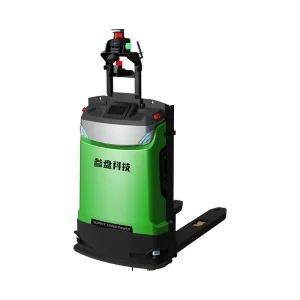
Dudelange High-Mast Laser SLAM Stacker Forklift SFL-CDD14-H
- Mast Construction: High-Rigidity Telescopic
- Vertical Reach: 3,200 mm High Bay
- Obstacle Detection: Dual 3D Time-of-Flight
- WMS Protocol: Open RESTful / VDA 5050
The Dudelange Material Handling Ecosystem: From Steel Heritage to Eurohub South Automation
The municipality of Dudelange (Diddeleng), anchored strategically in the southern canton of Esch-sur-Alzette, Luxembourg, stands as one of the most critical multimodal logistics crossroads in Western Europe. Positioned immediately along the Trans-European Transport Network (TEN-T) North Sea–Mediterranean and Atlantic Corridors, Dudelange operates at the epicenter of cross-border commerce connecting France, Germany, Belgium, and beyond. Facilities such as Eurohub South and the Bettembourg-Dudelange Intermodal Terminal—developed by CFL multimodal—handle massive volumes of rail-freight containers, semi-trailers, and high-frequency palletized cross-dock freight every calendar hour.
Historically dominated by heavy metallurgy and ArcelorMittal's long-standing steel manufacturing infrastructure, Dudelange's commercial base has transitioned rapidly over the past two decades into a premium warehousing, green supply chain, and high-value industrial production nexus. However, operating state-of-the-art warehouses and assembly facilities within Luxembourg presents distinctive economic hurdles:
Premium Regional Labor Costs
With Luxembourg maintaining some of the highest statutory minimum wages and labor compensation overheads in the world, certified Class-3 manual stacker and counterbalanced forklift operators command high hourly rates, rendering round-the-clock multi-shift warehouse operations cost-prohibitive without automation.
Critical Industrial Real Estate Scarcity
Industrial plot allocations across the Greater Region are heavily constrained. Dudelange operators cannot afford cavernous 3.5-meter aisles for bulky reach trucks. They require high-density narrow-aisle (VNA) stacking architectures that can safely retrieve and deposit Euro-pallets (800x1200 mm) and industrial pallets (1000x1200 mm) up to 3+ meters in aisles narrower than 2.0 meters.
Strict ESG & Decarbonization Mandates
Driven by national climate targets and European Green Deal regulations, Dudelange enterprises are systematically phasing out diesel-powered machinery and inefficient lead-acid stacker batteries in favor of zero-emission, fast-charging lithium iron phosphate (LiFePO4) systems with high thermal stability.
Strategic Dudelange Insight: Warehouse automation in the south of Luxembourg is no longer an experimental speculative venture; it is an urgent structural imperative. Suppliers capable of delivering robust, reflector-free Laser SLAM stacker forklifts with rapid 24-hour on-site commissioning are fundamentally redefining regional logistics economics across Eurohub South.
Global Technological Trends Reshaping Stacker Forklift Engineering
From passive hydraulic lifts to intelligent, self-mapping cyber-physical robotics operating in lights-out fulfillment facilities.
Material handling logistics is experiencing an unprecedented structural transition. The traditional manual pallet stacker—often plagued by ergonomic strain, human steering errors, racking collisions, and strict operator licensing constraints—is yielding to autonomous mobile robots (AMR) and intelligent AGV stackers. Leading international procurement directors are evaluating stacker forklift suppliers based on four core pillars:
1. The Transition from Magnetic/Reflector Guidance to Natural Feature SLAM
First-generation AGVs relied on destructive floor trenching for magnetic strips or ceiling/wall reflectors requiring millimetric surveying. Modern Laser SLAM (Simultaneous Localization and Mapping) utilizes ambient 360-degree LiDAR contours to construct dynamic 2D/3D point clouds. When a Dudelange cross-dock facility reorganizes its buffer layout or installs new cantilever racks, the smart stacker re-maps the facility via software without a single euro spent on civil floor retrofitting.
2. 3D Computer Vision Pallet Pose Recognition & Hole Detection
Standard manual forklifts rely on human eyesight to compensate for crooked pallets or off-center delivery trucks. State-of-the-art intelligent stackers integrate deep-learning vision sensors that calculate the 6-DoF (Degrees of Freedom) spatial orientation of the pallet fork pockets in real time, dynamically adjusting the fork elevation and side-shift angle to achieve flawless pallet pickup even if skewed up to ±15 degrees.
3. Collaborative Multi-Layer Safety (ISO 3691-4 & CE Norms)
Modern industrial robotics cannot operate behind cage barriers in dynamic warehouses. Leading stackers are outfitted with certified safety laser scanners creating dual-level dynamic safety fields (warning zone and emergency stop zone), combined with mechanical 3D obstacle bumper sensors, ultrasonic ground-drop detectors, and acoustical voice alerts to share tight aisles harmoniously with pedestrian staff.
4. Open API Orchestration & VDA 5050 Standard Interoperability
Global logistics managers reject proprietary closed ecosystems that trap them with single-vendor dependencies. Modern stackers feature modular RESTful APIs, MQTT messaging, and VDA 5050 protocol compliance, enabling instant communication between ERP, WMS, MES, roller conveyors, automated fire doors, and multi-vendor mobile robot fleets.
China Industry 4.0: Manufacturing Prowess, Hardware Precision & Cost Superiority
Why leading European logistics enterprises partner with premier Chinese industrial robotics manufacturers to secure strategic competitive advantage.
For decades, the European forklift market was dominated by legacy regional manufacturers whose equipment came burdened with exorbitant capital expenditure requirements, inflexible proprietary controllers, and lead times often extending past 9 to 14 months. The advent of China’s Industry 4.0 Smart Manufacturing Transformation has dismantled these historical barriers, establishing a new global benchmark for high-mix, high-precision automated material handling systems.
Sichuan Supply Chain Power Chain Technology Co., Ltd. (SCP Technology), headquartered in Chengdu, represents the vanguard of this new era. By fusing sovereign robotics R&D with China’s unmatched precision component industrial clusters, our supply chain delivers decisive operational dividends to European enterprises:
Unrivaled Economies of Scale
Leveraging vast domestic logistics modernization volumes across tier-1 manufacturing clusters, Chinese robotics manufacturers manufacture thousands of precision drive chassis, integrated hydraulic lift cylinders, and heavy steel masts monthly. This industrial scale drives production costs down 40% to 55% compared to Western European equipment builders.
Direct Integration of Tier-1 Sensors
Our stackers integrate world-class perception hardware—including Sick and Pepperl+Fuchs LiDARs, RoboSense solid-state scanners, and high-torque German-designed steering gear motors—paired with sovereign SCC motion controller architectures, guaranteeing industrial-grade reliability with zero compromises.
Agile Customization & Rapid Dispatch
While European legacy brands require protracted custom engineering consultations to modify fork spacing or lift mast profiles, our modular fabrication lines allow custom chassis configurations, specialized straddle leg widths, and tailored clamp attachments to be completed and shipped within weeks.
The Total Cost of Ownership (TCO) Architectural Comparison
Procurement executives in Dudelange evaluating material handling capital expenditure must calculate all direct and indirect operational costs over a standard 5-year lifecycle:
| Evaluation Dimension | Traditional Manual Walkie Stacker | Conventional Wire/Reflector AGV | SCP Laser SLAM Autonomous Stacker |
|---|---|---|---|
| Capital Acquisition Cost | Low (€12,000 – €22,000) | Extreme (€90,000 – €140,000) | Moderate (€35,000 – €55,000) |
| Site Retrofitting & Downtime | Zero site disruption | High (Floor magnetic tracks / reflectors) | Zero (Reflector-free natural contour mapping) |
| Annual Operator Labor Cost (3 Shifts) | €135,000 – €180,000 / year (Dudelange rates) | €0 (Autonomous) | €0 (Autonomous lights-out operation) |
| Docking Precision & Cargo Scrap | Variable (Human fatigue & pallet collision) | ±15 mm to ±25 mm | ±5 mm (LiDAR + 3D Vision AI alignment) |
| Battery System & Charging Cycle | Lead-Acid (8 hr charge, acid maintenance) | Lead-Acid or Li-Ion (Manual plug) | Lithium Iron Phosphate (Auto opportunistic charge) |
| Full Payback Period (ROI) | Negative (Continuous recurring labor overhead) | 36 – 48 Months | 10 – 14 Months in Eurohub South hubs |
Localized Industrial Deployment Scenarios in Dudelange & Greater Region
Real-world integration blueprints designed specifically for Luxembourg's heavy metallurgical heritage, high-bay intermodal warehouses, and clean consumer supply chains.
1. Rail-to-Road Cross-Dock Pallet Buffering at Bettembourg-Dudelange
At intermodal transfer stations, container loads arrive unpredictably from Antwerp and Rotterdam ports. Our SFL-CDD15 and SFL-CDD16 Laser SLAM stackers manage the staging ground, retrieving mixed pallets from offloading conveyors and buffer-stacking them dynamically into two- and three-tier floor lanes, coordinating seamlessly via WMS without requiring floor markers.
2. Precision Automotive & Machinery Component Feeding
For assembly plants throughout the southern industrial corridor supplying tier-1 automotive components into the Saarland and Grand Est clusters, our narrow-chassis wishbone stackers (such as the SFL-300L and CDD14-CE) navigate narrow 1.8-meter corridors to drop heavy raw forgings and machined subassemblies directly into robotic CNC workstations.
3. Cold Chain & Ambient High-Density Grocery Fulfillment
Food logistics hubs servicing Luxembourg supermarket chains require ultra-clean operations with minimal human footprint in humidity-controlled or chilled zones. Equipped with sealed electrical architectures and frost-resistant LiDAR systems, our lithium stacker series eliminates hydraulic leakage risks while keeping sensitive perishable foods moving 24 hours a day.
4. High-Bay Raw Materials Intermediate Stacking
Heavy fabrication plants handling steel coils, fasteners, and heavy cast billets utilize our heavy-duty SFL-CPD20-Y counterbalanced autonomous forklifts to interface directly between heavy inbound freight trucks and 3-meter racking bays, combining high counterbalanced stability with automated pallet fork recognition.
Frequently Asked Questions by Dudelange Plant Managers & Logistics Directors
Authoritative technical, regulatory, and integration answers to validate your stacker automation investment.
Complete Heavy-Duty, Counterbalanced & AMR Robot Portfolio for Dudelange
Discover our full equipment spectrum spanning 1,000 kg robot chassis, 1.6T high-reach stackers, and 2,000 kg counterbalanced powerhouses.
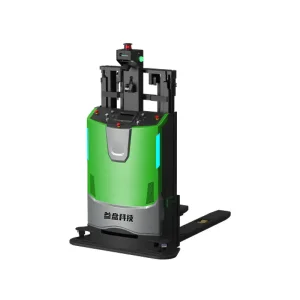
Dudelange High-Capacity Laser SLAM Stacker SFL-CDD15
- Rated Load: 1,500 kg Heavy Duty
- Maximum Elevation: 3,000 mm Reach
- Docking Tolerance: ±5 mm Precise
- Obstacle System: 3D Camera + Dual LiDAR
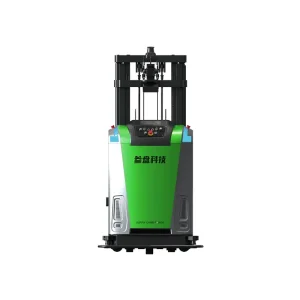
Dudelange Advanced Laser SLAM Stacking Smart Forklift SFL-CDD16
- Lift Load Capacity: 1,600 kg Payload
- Mast Configuration: Duplex / Triplex Mast
- Speed Vector: Up to 1.8 m/s Travel
- Pallet Auto-Identify: AI Visual Deep Learning
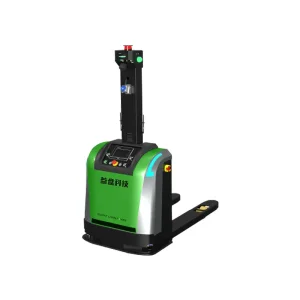
Dudelange Logistics Smart Forklift SFL-CBD16-S Laser SLAM 1.6T
- Handling Type: Horizontal Pallet Transport
- Payload: 1,600 kg Continuous
- Turning Aisle: Ultra-Tight 1,950 mm
- Fleet Sync: Server X Store Ready
Dudelange Heavy Factory Laser SLAM Stacker SFL-CDD16 (1600kg)
- Drive Motor: Heavy Duty AC Traction
- Lift Height: 3,500 mm Customized
- Battery Architecture: Fast-Charge Industrial LiFePO4
- Communication: Industrial 5G / Wi-Fi 6 Roaming
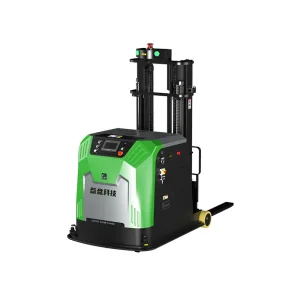
Dudelange Balanced Power Laser SLAM Forklift SFL-CPD20-Y (2000kg)
- Rated Payload: 2,000 kg High Payload
- Chassis Width: 1,180 mm Narrow Profile
- Pallet Types: All Shapes (Open / Closed)
- Battery Swap: 2-Minute Mechanical Swap

Dudelange Mobile Robot Chassis AMB-CSW10-BH (1T Load AMR)
- Chassis Payload: 1,000 kg Underride
- Top Structure: Telescopic Top Lift / Roller
- Profile Clearance: Ultra-Low Sub-Surface Entry
- Safety Coverage: Dual 360° Safety LIDAR
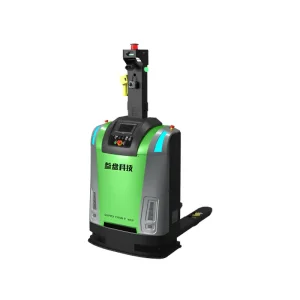
Dudelange Autonomous Smart Forklift SFL-CBD20 (2T Payload)
- Payload Rating: 2,000 kg Heavy Pallet
- Drive Wheel: Cushioned High-Traction Poly
- Braking Distance: Regenerative Electro-Magnetic
- Operating Life: 10+ Years Heavy Industrial
Dudelange Agile SFL-300L Smart Forklift (600mm Turning Radius)
- Compact Footprint: Smallest Form Factor Class
- Turning Radius: 600 mm Precision Pivot
- Target Environment: Cleanrooms, Kitting, Electronics
- Deploy Speed: Same-Day Zero-Code Setup
Upgrade Your Dudelange Operations to Autonomous Intelligence
Request an immediate engineering consultation, customized facility simulation, and competitive factory-direct pricing for your warehouse.